Whale Watching from Reykjavik: Tours Compared Honestly
Reykjavik: The Original 3-Hour Whale Watching Tour
Whale watching from Reykjavik: what you are actually booking
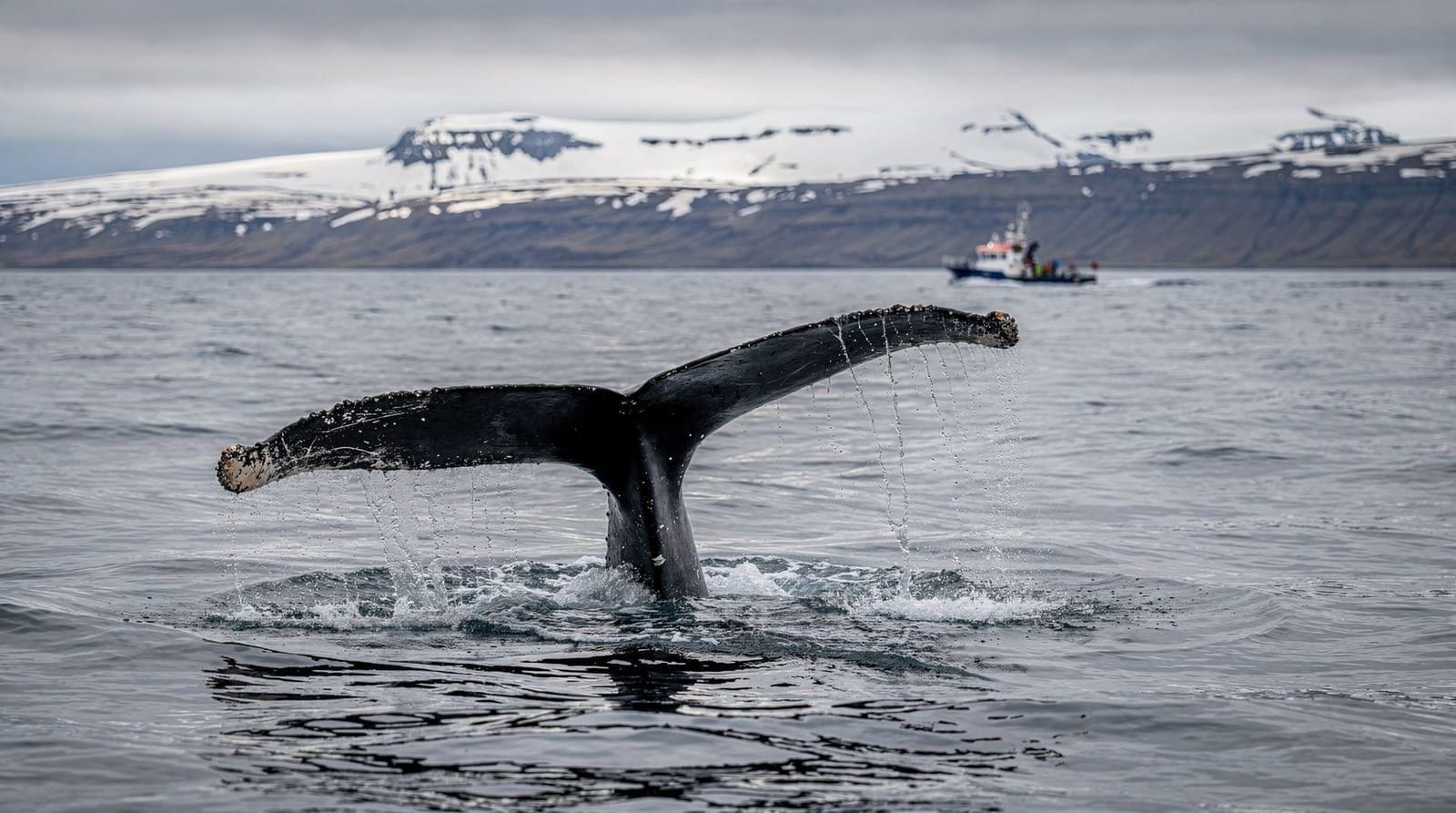
Reykjavik sits on Faxafloi Bay, a productive feeding ground for minke and humpback whales. Multiple companies run daily tours from the Old Harbour (Granda area), using everything from large multi-deck vessels to carbon-fibre RIB speedboats to classic sailing yachts. The destination is roughly the same; the experience varies considerably.
This guide looks at four distinct formats — traditional 3-hour big boat, 2-hour speedboat, small expert-guide tour, and premium yacht — and explains the real tradeoffs for each.
For deeper background on what species to expect and the best seasons, see the whale watching Reykjavik guide.
| Where | Old Harbour (Granda), Reykjavik, out into Faxafloi Bay |
| Cost | Around €65-180 per person depending on format |
| Time needed | 2-3 hours on the water |
| Getting there | 10-15 minute walk or short taxi from the city centre |
| Best time | April-October; peak June-August for calmer seas and higher numbers |
Format comparison
| Format | Vessel | Group size | Duration | Approx. price (pp) | Best for |
|---|---|---|---|---|---|
| Classic 3-hour tour | Large boat (100-200 cap) | Large | 3 h | ~€65-80 | First-timers, families |
| RIB speedboat | RIB (12-30 cap) | Small-medium | 2 h | ~€75-100 | Thrill-seekers, fit adults |
| Expert-guide small tour | Small boat (20-40 cap) | Small-medium | 3 h | ~€80-110 | Wildlife enthusiasts |
| Luxury yacht | Sailing/motor yacht | Very small | 2-3 h | ~€120-180 | Small groups, special occasions |
The classic 3-hour tour: the standard option
The original 3-hour whale watching tour is the Reykjavik benchmark. It has run since the late 1990s and uses a large multi-deck vessel with indoor seating, a heated cabin, a small cafe, and binoculars available for loan. A guide narrates what you are seeing via loudspeaker.
What you get: 3 hours on the water, a professional guide, and access to a warm cabin when it is cold or wet outside. What you do not get: intimate proximity to wildlife or the flexibility of a smaller vessel. When a humpback surfaces, everyone rushes to one side of the deck and you may only see a tail fluke at 200 metres.
This is still a good tour for families with children, first-time whale watchers, and anyone uncertain about sea legs — the large vessel is considerably more stable than a RIB.
RIB speedboat: fast, cold, thrilling
The whale watching tour by speedboat cuts through the bay at 40+ km/h in an open RIB (rigid inflatable boat). Passengers wear full survival suits provided by the operator. You reach the whale grounds faster and the lower hull profile means you are closer to the water — and to the whales when you find them.
The realities: you are exposed to wind and spray for the full 2 hours; the ride out and back is rough even in moderate seas; and the tour is shorter. This is genuinely exciting but not appropriate for anyone prone to motion sickness, passengers with back problems, or families with young children. On flat summer days it is spectacular. On a choppy October morning it is brutal.
Price is similar to or slightly higher than the classic tour. If you have done the big boat before and want something more adventurous, this is worth trying.
Expert-guide small group: best for wildlife enthusiasts
The whale watching tour with expert guide uses a smaller vessel and provides a naturalist guide rather than a general commentary. Guides on these tours can identify individual whales, explain behaviour, and provide context on whale ecology. Group sizes are smaller, which means better sightlines when animals surface.
This format tends to attract serious wildlife watchers who want to understand what they are seeing, not just photograph it. The price premium over a big-boat tour is usually €20-40 per person.
Yacht tours: small group, premium experience
The whale watching cruise on the Amelia Rose yacht carries a very small group — often 6-12 people — on a sailing yacht. The pace is slower and the experience is quieter. When whales appear, there are fewer people competing for deck space and sightlines are genuinely better.
Cost is the obvious deterrent: roughly €120-180 per person, or more for private charters. This makes most sense for couples or small groups who want an intimate experience and do not mind spending significantly more. It is also a better choice for people who find large-vessel crowds unpleasant.
Practical notes for whale watching
- Departure: All major operators depart from the Old Harbour (Granda area) in Reykjavik, a 10-15 minute walk or short taxi from the city centre.
- What to wear: Even in summer, the bay is cold and windy. Bring a windproof layer and warm hat regardless of how warm it is in the city. RIB tours provide full thermal suits; traditional tours provide blankets but you dress yourself.
- Booking: Free cancellation is available on most listings up to 24 hours before. In summer, book 1-2 days ahead to secure a space; walk-up availability is common but not guaranteed.
- If no whales appear: Most operators offer a complimentary re-tour. Confirm this before booking.
- Combining with other activities: A morning whale watching tour (departs ~9:00 am, returns ~12:00) pairs naturally with an afternoon in Reykjavik city centre, or with an evening northern lights tour.
Frequently asked questions about whale watching from Reykjavik
What whales can you see from Reykjavik?
Humpback whales are the most commonly spotted species, along with minke whales. White-beaked dolphins are frequent in summer. Orca are possible but not common from Reykjavik. Blue whales occasionally pass through.
What time of year is best for whale watching in Reykjavik?
April through October is the prime season. Peak encounters are June-August when whale numbers in Faxafloi Bay are highest and sea conditions are calmer. Winter tours operate but sighting rates drop and the sea is rougher.
What is the whale sighting success rate?
Most Reykjavik operators quote 95-98% success rates in summer. Reality is typically 80-90% across the full season. A “sighting” can range from a distant blow to a full breach 50 metres from the boat.
How seasick should I be worried about?
Faxafloi Bay can be choppy, especially on RIB speedboats. If you are prone to motion sickness, take medication before boarding, sit near the middle of the vessel, stay on deck, and consider a larger boat tour.
How long are whale watching tours?
Traditional big-boat tours run 3 hours. RIB speedboat tours are typically 2 hours. All depart from the Old Harbour in Reykjavik.
Are puffins visible on whale watching tours?
In summer (May-August), puffins are visible on many tours. Some tours are marketed as “whale and puffin” — this means puffins are a likely bonus, not a guarantee. The Reykjavik half-day whales and puffins combo tour is a standard version of this format if seeing both is a priority.
Should I choose the classic boat or the RIB speedboat?
Choose the classic boat if you get seasick easily, have back problems, or are travelling with children — it is warmer and more stable. Choose the RIB if you want speed and a closer-to-the-water experience and do not mind wind, spray, and a full survival suit for two hours.
Can I combine whale watching with other Reykjavik activities the same day?
Yes — a morning tour typically finishes by noon, leaving the afternoon free for the city centre, Hallgrimskirkja, or an evening northern lights tour if the season allows.
See how a whale watching tour fits into your trip in the 3-day Reykjavik itinerary or the full 5-day itinerary.
What happens if no whales appear?
The short answer: you get a re-tour. Every reputable whale watching operator in Reykjavik offers a complimentary re-tour if no whales are spotted. Confirm this policy is in place when booking — most GYG listings state it explicitly. If you have a tight schedule, check whether the re-tour can be used the following day rather than requiring a return to Iceland.
The longer answer: what counts as a “sighting” varies. A minke whale surfacing once at 300 metres and submerging for good technically qualifies. If this happens, a conscientious operator will offer the re-tour anyway; a less scrupulous one may not. The large, established Reykjavik operators (who run multiple boats per day) are consistent about honouring the guarantee. Smaller boutique operators depend more on the individual captain’s judgement.
What species can you realistically expect?
Minke whales are the most frequently spotted. They are fast, move erratically, and are notoriously difficult to predict — they surface briefly and are gone. Seeing a minke well requires luck and patience.
Humpback whales are more dramatic. They are larger, slower, and often surface repeatedly in the same area. When humpbacks are actively feeding in Faxafloi Bay, tours encounter them reliably. A humpback breaching fully out of the water is rare but happens.
White-beaked dolphins travel in groups of 10-50+ and are reliably present in summer. They swim alongside and under the boat, which is one of the most entertaining wildlife encounters on any tour.
Harbour porpoises are small and shy — a flash of dark fin before they are gone. Spotted on most tours but easily missed if you are not scanning.
Orca are occasionally seen but are not a reliable Reykjavik species. If seeing orca specifically is your goal, the waters around the Snaefellsnes Peninsula or Dalvik in North Iceland offer better odds in winter.
Choosing between the classic boat and the RIB speedboat honestly
The single biggest decision on this page is vessel type, and it comes down to comfort tolerance rather than which one sees more whales — both operate in the same bay and encounter similar wildlife. If you get seasick easily, have back or neck issues, are travelling with young children, or simply want a warm cabin to retreat to, the classic 3-hour tour is the right call, full stop. If you want speed, a lower vantage point closer to the water, and do not mind wind and spray for two hours in a survival suit, the RIB is genuinely more exhilarating. Neither is objectively better; they are different experiences of the same bay.
Fitting whale watching into a Reykjavik day
Morning departures (typically around 09:00, returning by noon) leave the rest of the day free for the city itself — Hallgrimskirkja, the harbour district around Harpa, or Laugavegur’s shops and cafes are all a short walk from the Old Harbour where tours depart. This makes whale watching one of the easiest half-day activities to slot into a short Reykjavik stay without sacrificing a full day trip elsewhere. See the 3-day Reykjavik itinerary for how it fits alongside a Golden Circle day and time in the city.