Blue Lagoon and Reykjanes: geothermal spa and volcanic peninsula
Honest guide to the Blue Lagoon: current prices in ISK, what to book, tourist traps, plus the Reykjanes peninsula's volcanic hikes and geopark.
From Reykjavik: Blue Lagoon Admission with Transfers
Quick facts
- Distance from Reykjavik
- 50 km, ~45 min via Route 41
- Distance from KEF Airport
- 22 km, ~20 min
- Blue Lagoon Comfort entry
- ~12,990-15,990 ISK (~€88-109) in 2026
- Blue Lagoon Premium entry
- ~19,990-24,990 ISK (~€136-170)
- Water temperature
- 37-39°C year-round
The Blue Lagoon: worth the hype, worth reading before you book
The Blue Lagoon is Iceland’s most visited attraction and one of the most commercially sophisticated tourist operations in Europe. The milky blue water is real — silica and minerals from geothermal seawater create a genuinely distinctive aesthetic. The crowds, mandatory prebooking, and pricing structure are also real. This guide tells you what you are actually paying for and how to get the most out of it.
| Where | Grindavík, Reykjanes peninsula |
| Cost | Around 12,990-24,990 ISK depending on package |
| Time needed | 2-3 hours for the lagoon; half a day with Reykjanes stops |
| Getting there | 45 min from Reykjavik, ~20 min from KEF airport |
| Booking | Mandatory timed entry — no walk-ins |
From Reykjavik: Blue Lagoon Admission with Transfers
What the Blue Lagoon actually is
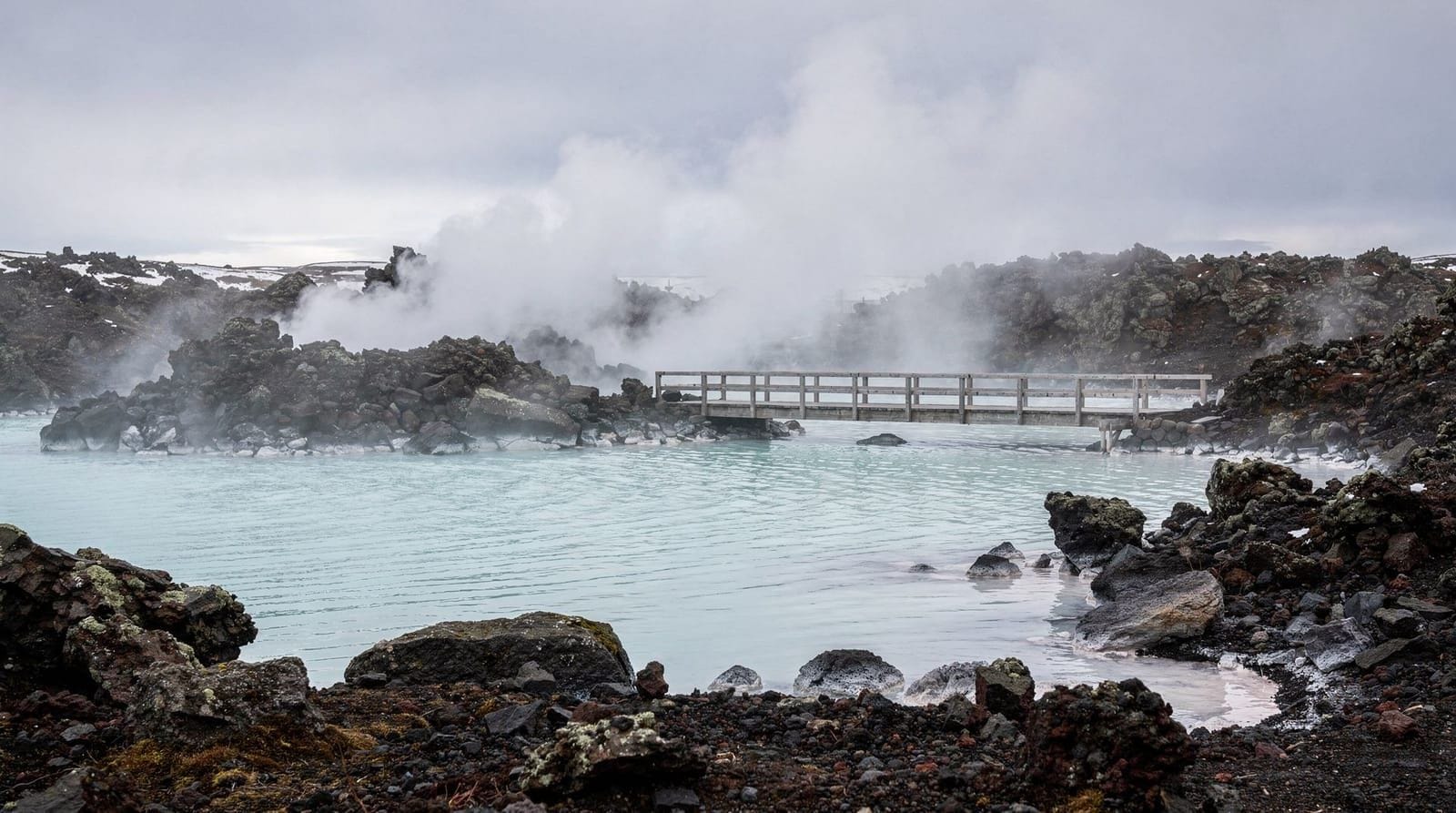
The Blue Lagoon is not a natural hot spring. It is a large geothermal seawater pool fed by waste runoff from the Svartsengi geothermal power plant, which generates electricity and heat for the Reykjanes peninsula. The plant pumps up superheated seawater from 2,000 meters below the lava field. The water used to be simply discharged; it was discovered in the 1970s that the silica and mineral-rich runoff created beneficial skin effects, and bathing here became informal first, then commercial.
The water really is the color you see in photographs. It is mildly alkaline (pH around 7.5-8) with high silica content, and the white silica mask offered on-site is extracted from the lagoon floor. The temperature is maintained at 37-39°C throughout.
Pricing and packages (2026)
The Blue Lagoon uses timed entry with three package tiers:
Comfort (~12,990-15,990 ISK / ~€88-109): entry, one silica mud mask, use of towel and bathrobe. This is the minimum viable visit.
Premium (~19,990-24,990 ISK / ~€136-170): adds a second mask type (algae), bathrobe, drinks (one welcome drink at the bar-in-the-water), and various small add-ons. The water bar is a novelty; the drinks are standard.
Retreat (~69,990+ ISK / ~€476+): access to the private Retreat Spa, private bathing area, full spa treatments. Worth it only if the price point means nothing to you.
| Package | Price (ISK) | Includes |
|---|---|---|
| Comfort | ~12,990-15,990 | Entry, silica mask, towel, bathrobe |
| Premium | ~19,990-24,990 | + algae mask, drink, extra add-ons |
| Retreat | ~69,990+ | Private Retreat Spa, own bathing area, treatments |
Note: prices have increased substantially since 2020. Walk-in entry is no longer available — all visits require prebooking online with a timed entry slot. Failure to prebook means no entry.
Book the Blue Lagoon admission package with drink, towel, and mask directly — this is the most practical Comfort+ arrangement.
Practical visit tips
Timing: the first slots (08:00) and last slots (around 19:00-21:00 depending on season) are noticeably less crowded than the 10:00-15:00 peak window. Evening visits in winter are particularly atmospheric under the northern lights.
Hair: the silica-rich water tangles and damages hair. The Blue Lagoon sells its own conditioner and hair mask for this reason. Apply conditioner before entering the water and keep your hair tied up. Long hair that goes in unprotected will need serious conditioning afterward.
Logistics: the changing rooms are well-managed but busy. Bring flip-flops. Lockers are electronic wristband-operated. The outdoor temperature in Iceland ranges from -10°C to +20°C depending on season; the water-to-air temperature contrast in winter is dramatic.
Children: minimum age for entry is 2 years. Children under 13 get in free with paying adults (requires prebooking a slot for them). The water is not suitable for infants.
Photography: the facility is designed to be photogenic. Hundreds of people are taking photos at all times. Good shots require patience and timing, particularly at the main pool.
Is it worth the money?
Honestly: it depends on your context. If you are on a 3-day stopover and want a genuinely unique experience that photographs well and feels restorative, yes. If you are a budget traveler or want something less commercial, the Sky Lagoon in Reykjavik is a more intimate and architecturally beautiful option for less money.
The Blue Lagoon vs Sky Lagoon comparison breaks down the honest trade-offs. For a full Blue Lagoon guide including the complete booking process, see that dedicated resource.
The Reykjanes Peninsula beyond the Blue Lagoon
Most visitors to the Blue Lagoon see only the spa and leave. The Reykjanes Peninsula is worth considerably more time than that. If you would rather not self-drive between the sights below, a private guided tour of the Reykjanes Peninsula from Hafnarfjörður covers them with a local guide instead.
Gunnuhver hot springs: 3 km southwest of Grindavík, a large mud-boiling geothermal field with boardwalk paths over the steaming ground. The Reykjanes UNESCO Global Geopark incorporates this area. Entry free.
Bridge Between Continents: a small footbridge above the Miðlínugjá rift fissure, marking where the North American and Eurasian plates diverge. A symbolic location more than a grand spectacle; the associated tourist infrastructure is underwhelming. But worth 20 minutes if you are nearby.
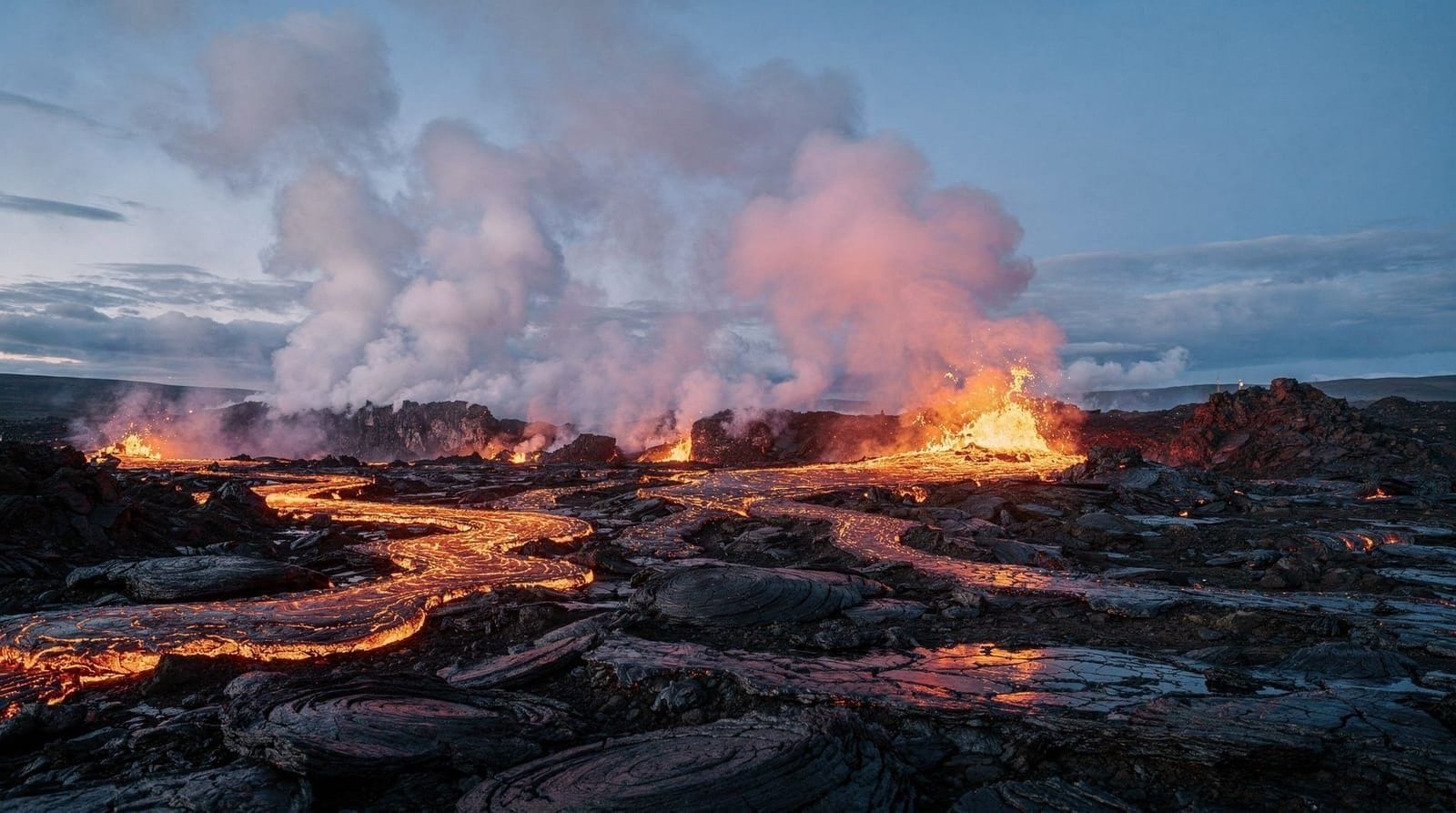
Fagradalsfjall and Sundhnúkur volcanic area: the Reykjanes peninsula has been in an active volcanic period since 2021, with eruptions at Fagradalsfjall (2021, 2022, 2023) and the Sundhnúkur crater row (2023-2024, affecting Grindavík). Eruption sites remain accessible with guided hikes when conditions allow.
Book a Reykjanes volcanic eruption site and hiking tour to see the recent lava fields with a geologist guide who can explain what you are looking at. The 2021-2024 eruptions produced the most accessible lava flows in Iceland’s modern history.
Grindavík town: the fishing town closest to the Blue Lagoon was partially evacuated multiple times between November 2023 and early 2024 due to volcanic unrest and ground deformation. By 2025, partial rebuilding and reopening was underway. Check current status before visiting.
Reykjanes lighthouse: at the southwestern tip of the peninsula, one of Iceland’s oldest lighthouses (rebuilt several times due to eruptions). The drive out passes lava fields, seabird colonies, and geothermal steam vents.
Krýsuvík geothermal area: a boiling mudpot and sulfur field around Seltún, further east on the peninsula than Gunnuhver, with boardwalks over the most active vents and views down to the green-tinged Kleifarvatn lake nearby. Considerably less visited than the Blue Lagoon or Gunnuhver, and free to enter.
Selatangar: an abandoned fishing settlement on the south shore, stone ruins of turf-roofed huts used seasonally by fishermen until the early 20th century, set against black lava and pounding surf. A short, unmarked walk from a gravel pull-off — no facilities, no crowds, and genuinely atmospheric at dusk.
How much time to actually budget
A minimum Blue Lagoon visit — arrive, bathe for 90 minutes, shower, leave — takes about 2.5 hours door to door from Reykjavik. Adding the Reykjanes sights properly (Gunnuhver, the Bridge Between Continents, a lava field viewpoint) turns this into a full half-day. Combining the lagoon with a flight departure or arrival is efficient use of otherwise dead time, but do not try to cram the full Reykjanes geopark into a tight layover — pick either the spa or the peninsula if your window is under four hours.
Getting there
From Reykjavik: take Route 41 to Route 43 toward Grindavík. The drive is ~45 minutes on clear roads, longer in winter conditions. Flybus and Reykjavik Excursions both run direct buses from BSÍ terminal.
The Blue Lagoon is optimally positioned as either a first stop (from KEF airport, 22 km, 20 minutes) or a last stop (drop bags at the lagoon, fly out after). This KEF-Blue Lagoon-Reykjavik corridor is the most common configuration, with operators offering one-way transfers with luggage storage time at the lagoon.
From KEF: the Blue Lagoon is 22 km, about 20 minutes. If you have a long layover or an afternoon departure, this is the most logical use of airport waiting time. Book round-trip transfer plus entry together to avoid the full Reykjavik routing.
For a full Reykjanes geopark day including volcano hikes, bridge, and Blue Lagoon, the Reykjanes volcano guide provides the complete itinerary. For overall Iceland trip costs, see the Iceland cost and budget guide.
Top experiences
Bookable activities with verified prices and instant confirmation on GetYourGuide.