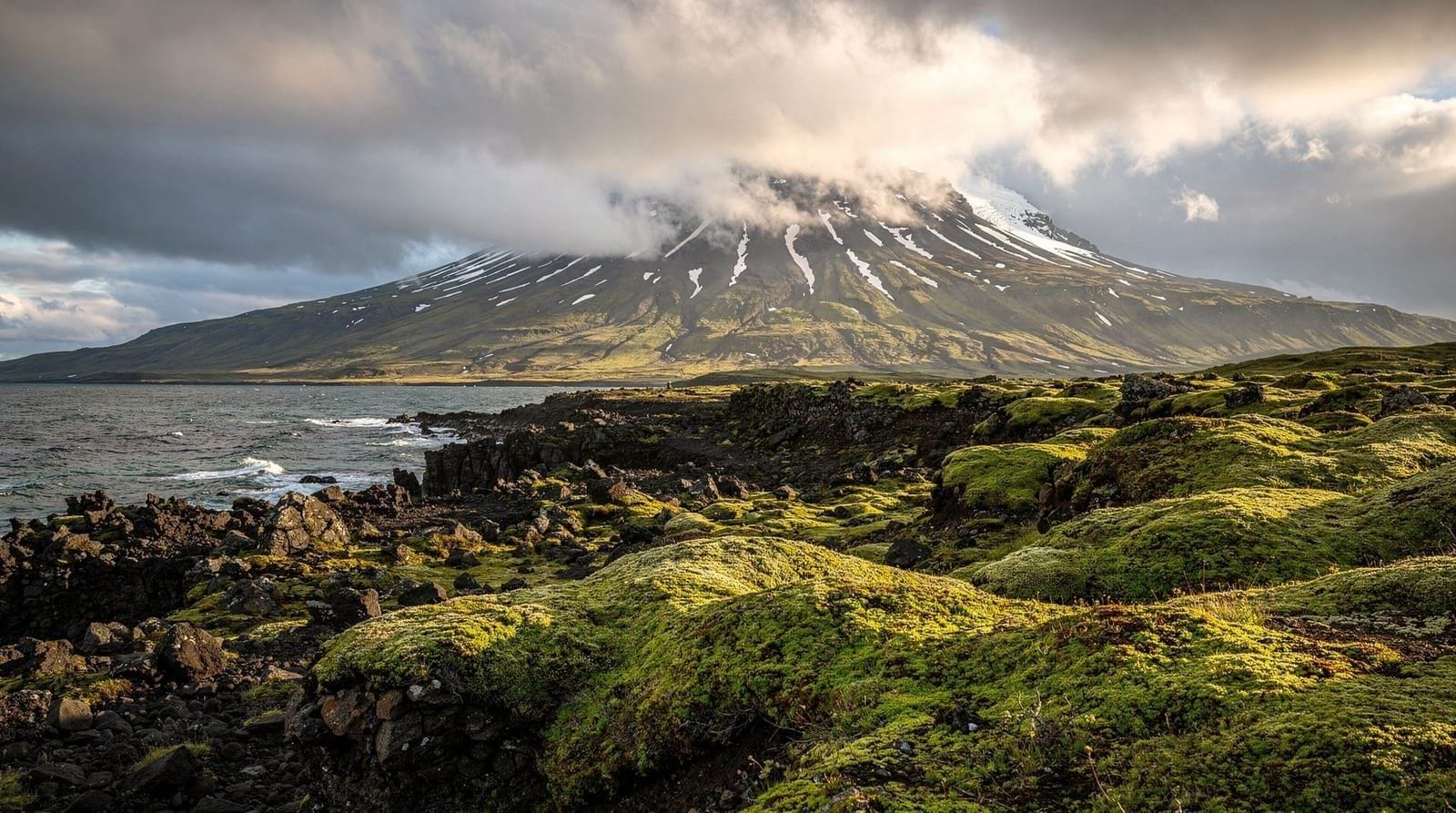
Jökulsárlón glacier lagoon: icebergs drifting to Diamond Beach
Jökulsárlón glacier lagoon guide: amphibian boat tours, Diamond Beach, Fjallsárlón, Vatnajökull ice caves, and the 4.5-hour drive from Reykjavik.
From Reykjavik: Jökulsárlón Glacier Lagoon and Diamond Beach
Quick facts
- Distance from Reykjavik
- ~378 km, ~4.5-5h on Route 1
- Amphibian boat tour
- ~7,500-9,000 ISK (~€51-61) per adult
- Zodiac boat tour
- ~13,000-16,000 ISK (~€88-109)
- Vatnajökull ice cave tour
- ~18,000-28,000 ISK (~€123-190)
- Diamond Beach parking
- Free
Iceland’s deepest lake, filled with moving glaciers
Jökulsárlón is Iceland’s most visually dramatic single site: a tidal lagoon filled with icebergs calving from Breiðamerkurjökull glacier, which is itself an outlet of the Vatnajökull ice cap — Europe’s largest glacier by volume. The lagoon has grown from 7 km2 in 1970 to over 80 km2 today as the glacier retreats, and its depth now exceeds 300 meters in places.
The icebergs drift slowly through the lagoon, calving and rolling, before the outflow river carries them the short distance to the Atlantic where they wash ashore at Diamond Beach. The visual — blue-white ice blocks on black volcanic sand — is one of the most distinctive anywhere in Iceland.
The honest caveat: Jökulsárlón is 378 km from Reykjavik on Route 1. The drive takes 4.5-5 hours without stops. A day trip is genuinely exhausting — 9-10 hours of driving for 2-3 hours at the lagoon. An overnight along the South Coast makes the experience dramatically more relaxed.
| Where | ~378 km southeast of Reykjavik on Route 1 |
| Time needed | 2-3 hours at the lagoon; a full day if driving from Reykjavik |
| Cost | Boat tours around 7,500-16,000 ISK per adult |
| Getting there | Self-drive on paved Route 1, or a full-day coach tour |
| Best time | Summer for boats; Oct-Mar for ice caves |
From Reykjavik: Jökulsárlón Glacier Lagoon and Diamond Beach
The boat tours: which one to choose
Two types of boat operate on the lagoon:
Amphibian boats (operated by Glacier Lagoon — the original operator, also called Glacier Boats): large orange vehicles that drive into the lagoon and float. They carry 40-50 passengers, run 40-minute circuits among the icebergs, and allow close approach to the ice. Cost: approximately 7,500-9,000 ISK (~€51-61). Season: May through November.
Zodiac RIB boats (smaller inflatable speedboats): operated by multiple companies in addition to the amphibian tour. Faster, more agile, wetter, and more exhilarating. They access smaller channels between icebergs that the amphibians cannot. Cost: approximately 13,000-16,000 ISK (~€88-109). Season: roughly May through October.
Both tours require prebooking in peak season (June-August); walk-up space exists outside those months. The amphibian tour is more family-friendly; the Zodiac is better for photographers wanting close detail shots from water level.
| Season | Boat tours | Ice caves |
|---|---|---|
| May-June | Amphibian boats running | Closed |
| July-August | Both boat types, peak crowds | Closed |
| September-October | Zodiac tapering off, amphibian into Nov | Opening in Oct |
| November-March | Closed | Prime season, book weeks ahead |
| April | Closed | Closing, conditions less stable |
Book Jökulsárlón glacier lagoon boat tour with Diamond Beach in advance to guarantee a slot.
Diamond Beach
Diamond Beach is the name given to the stretch of Breiðamerkursandur black sand beach where the glacial outflow from Jökulsárlón deposits icebergs that have passed through the river mouth. The beach is directly across Route 1 from the lagoon parking area — a 5-minute walk.
The icebergs range in size from small blocks to pieces several meters across, in various stages of melting and reshaping. The contrast of clear or blue-white ice against the pure black sand is the photograph most people come to Iceland to take. Morning light from the east illuminates the ice; sunset light from the west saturates it. Overnight in the area and visit at both times if you can.
Warning: do not attempt to climb the larger ice blocks. They are unstable, can roll without warning, and the water they lie in is cold enough to cause cold shock. Several visitors have been injured here.
Fjallsárlón: the quieter neighbor
Fjallsárlón is a second glacier lagoon 10 km west of Jökulsárlón, equally fed by Vatnajökull outlet glaciers but smaller, visited by far fewer people, and genuinely tranquil. The lagoon runs boat tours (smaller and cheaper than Jökulsárlón), and the hiking along the lagoon edge and up onto the moraine gives a perspective that the big lagoon’s infrastructure does not.
Book the Fjallsárlón secluded glacier hike and iceberg boat tour if you want a less crowded experience than the main lagoon. The scenery is comparable; the experience is quieter.
Vatnajökull ice caves (winter)
The Vatnajökull ice cap contains natural ice cave formations accessible from October through March, when temperatures are low enough to make the ice stable. The caves are typically accessed from either the Jökulsárlón area or from Skaftafell (about 80 km west).
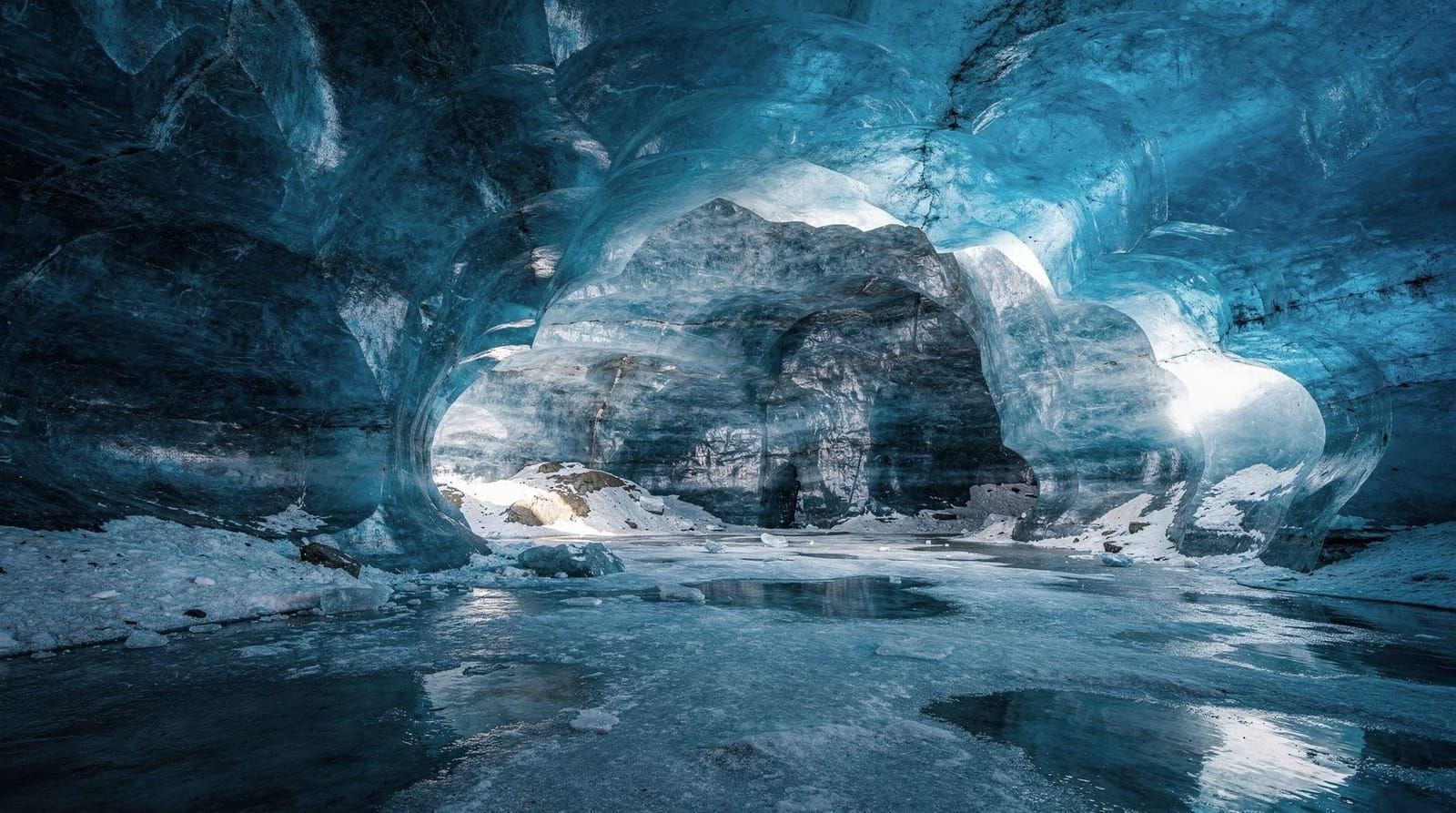
The cave interiors show ice formations in shades from clear to deep blue, with visible rock and ash layers from historical eruptions. Access requires a licensed guide and a 4x4 super jeep to reach the cave entrances across the glacier. The tours are popular and book up months in advance for December and January.
Book a Vatnajökull ice cave guided tour from Jökulsárlón well in advance for winter visits. The season is roughly October through March but is weather-dependent; operators will rebook if cave conditions deteriorate. For the complete glacier experience guide, see glacier hikes and ice caves.
Skaftafell and Svínafellsjökull
The Skaftafell area within Vatnajökull National Park, 80 km west of Jökulsárlón, is Iceland’s premier glacier hiking destination. Multiple outlet glaciers of Vatnajökull terminate here at accessible elevations. The Skaftafellsjökull and Svínafellsjökull glaciers both have parking areas and marked trails to the glacier edge.
Guided glacier hikes from Skaftafell run year-round on Svínafellsjökull and the other accessible outlets. The “Easy” glacier hike (2-3 hours on ice, crampons provided) is appropriate for most fitness levels. The “Moderate” and “Blue Ice” hikes access deeper glacier terrain. Costs: 13,000-20,000 ISK (~€88-136) depending on tour type.
The Svartifoss waterfall (40-minute walk from the Skaftafell visitor center) flows over a curtain of basalt columns. It inspired the architect of Reykjavik’s Hallgrímskirkja church.
Höfn: the practical overnight base
Höfn (population ~2,200), 78 km east of Jökulsárlón, is the nearest town with a proper range of hotels, guesthouses, restaurants, and a supermarket. It is a working fishing harbor known locally for langoustine (humar), served in most restaurants in town during the summer season. Basing here for a night, rather than pushing on or turning back the same day, is what makes an unhurried visit to the lagoon and Diamond Beach realistic, and it shortens the return drive toward the South Coast the next morning.
Getting to Jökulsárlón
By car: Route 1 the entire way, paved, no 4x4 required in summer. In winter, the route can be affected by ice and wind-driven snow; check road.is for conditions before departure. Plan 4.5-5 hours each way, more in winter.
By tour bus: several operators run full-day Jökulsárlón tours from Reykjavik (14 hours total, roughly 5-6 hours at the lagoon including boat tour). This is a very long day; you arrive tired. Book a full-day Jökulsárlón trip from Reykjavik if a day trip is your only option.
The better approach for most visitors: spend a night on the South Coast (Kirkjubæjarklaustur or Höfn are the nearest towns with proper accommodation) and do the lagoon at a relaxed pace as part of a 2-day South Coast adventure rather than a marathon day trip.
What to bring
The lagoon area is exposed to Atlantic wind. Even in summer, temperatures at the lagoon can be considerably colder than Reykjavik — bring an extra layer and a wind shell. Camera filters for polarizing the ice reflections are useful. Tripod for the long exposures at Diamond Beach in evening light.
For the complete guide with seasonal timing and the best combinations with South Coast stops, see Jökulsárlón glacier lagoon guide. To incorporate Jökulsárlón into a longer Iceland trip, the Iceland 7-day from Reykjavik itinerary shows the realistic pacing.
Top experiences
Bookable activities with verified prices and instant confirmation on GetYourGuide.