Golden Circle: Þingvellir, Geysir, and Gullfoss in one day
Honest guide to the Golden Circle route: Þingvellir, Geysir, Gullfoss, Kerið. Drive times, tour options, costs in ISK, and what to skip.
Reykjavik: The Golden Circle Full-Day Tour
Quick facts
- Distance from Reykjavik
- ~250 km loop, 1.5-2h to first stop
- Drive time loop
- Full loop ~4h driving + stops = full day
- Gullfoss parking fee
- ~700 ISK (~€5)
- Kerið Crater entry
- 900 ISK (~€6)
- Geysir area
- Free (parking and viewing area)
Three stops, one full day, no realistic shortcuts
The Golden Circle is Iceland’s most-visited route for a straightforward reason: it packages three geologically distinct and genuinely impressive sites into a single loop that can be driven in a day from Reykjavik. Nearly every Iceland first-timer does it. The honest question is not whether to go but how to do it without the worst of the crowds.
The classic loop covers approximately 250 km and links Þingvellir National Park (UNESCO World Heritage Site), the Geysir geothermal area, and Gullfoss waterfall. Most tours and self-drive visitors add Kerið volcanic crater on the return leg. The Strokkur geyser at Geysir erupts every 5-10 minutes without fail; Gullfoss drops 32 meters into a canyon; Þingvellir sits directly on the Mid-Atlantic Ridge where two tectonic plates visibly diverge.
| Where | Þingvellir, Geysir, Gullfoss loop, ~250 km from Reykjavik |
| Time needed | Full day, 1.5-2h to first stop plus ~4h driving |
| Cost | Free to enter sites; parking fees around 700-900 ISK each |
| Getting there | Self-drive on paved roads, or a guided coach/minibus |
| Best time | Year-round; arrive before 09:30 to beat tour buses |
Reykjavik: The Golden Circle Full-Day Tour
Þingvellir National Park
Þingvellir is 50 km northeast of Reykjavik on Route 36, roughly 45-55 minutes driving. The national park holds two distinct draws:
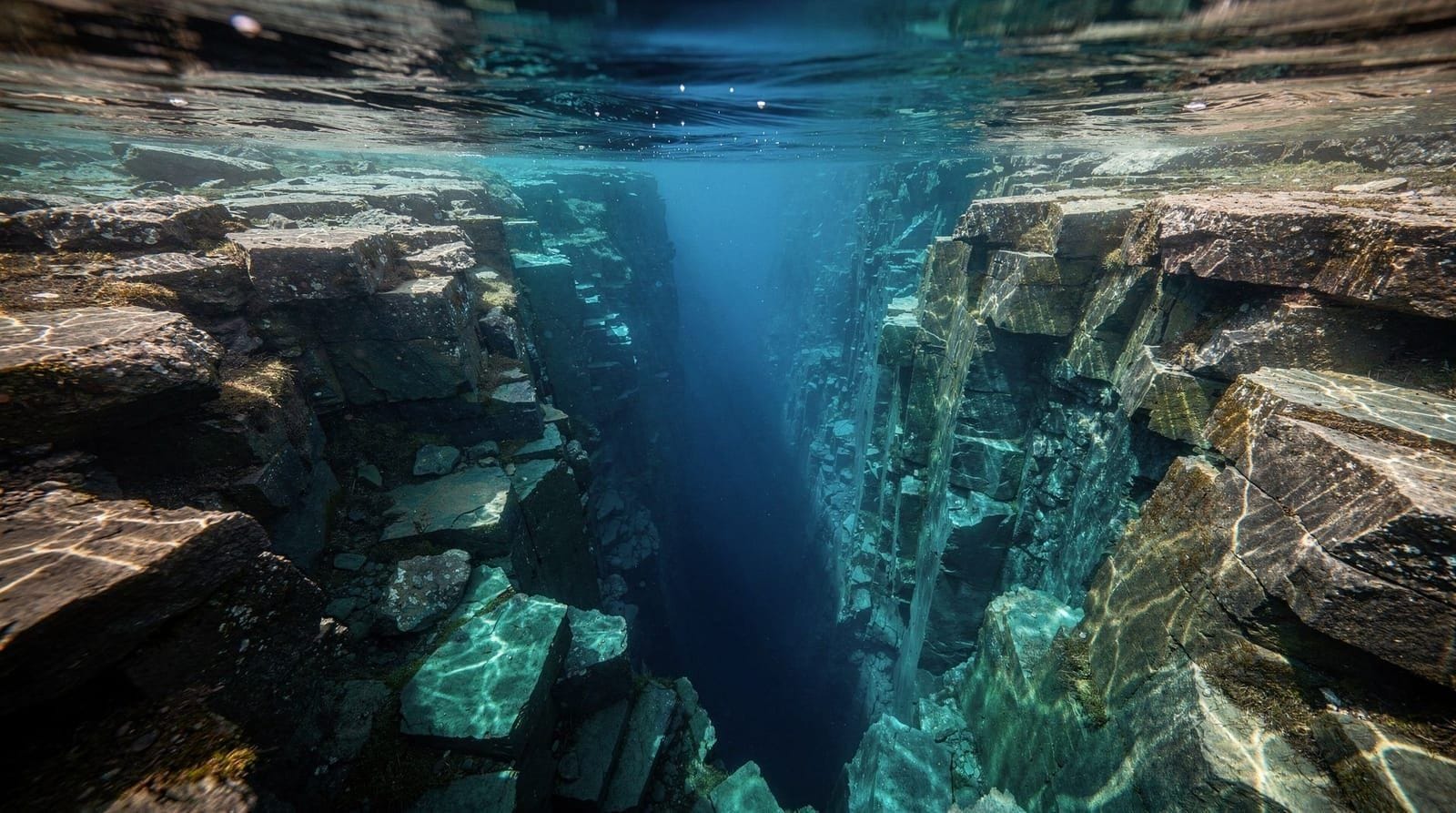
Geological: the Almannagjá rift valley marks where the North American and Eurasian tectonic plates are pulling apart at roughly 2 cm per year. Walking through the Almannagjá gorge gives a tangible sense of the scale. The Silfra fissure, filled with glacial meltwater filtered through lava for decades, is where divers and snorkelers swim between continents — visibility over 100 meters, water temperature 2-4°C year-round. See the Silfra snorkeling guide for what certification you need.
Historical: the Alþingi, Iceland’s parliament, was established here in 930 CE — it is one of the oldest parliamentary sites in the world. The Lögberg (Law Rock) site and the Öxará river are worth exploring slowly.
Allow 1.5-2 hours at Þingvellir if you walk properly. The parking area fills early in summer — aim for arrival before 09:30. Entry is free; parking 700 ISK. The visitor center has good context.
Geysir geothermal area
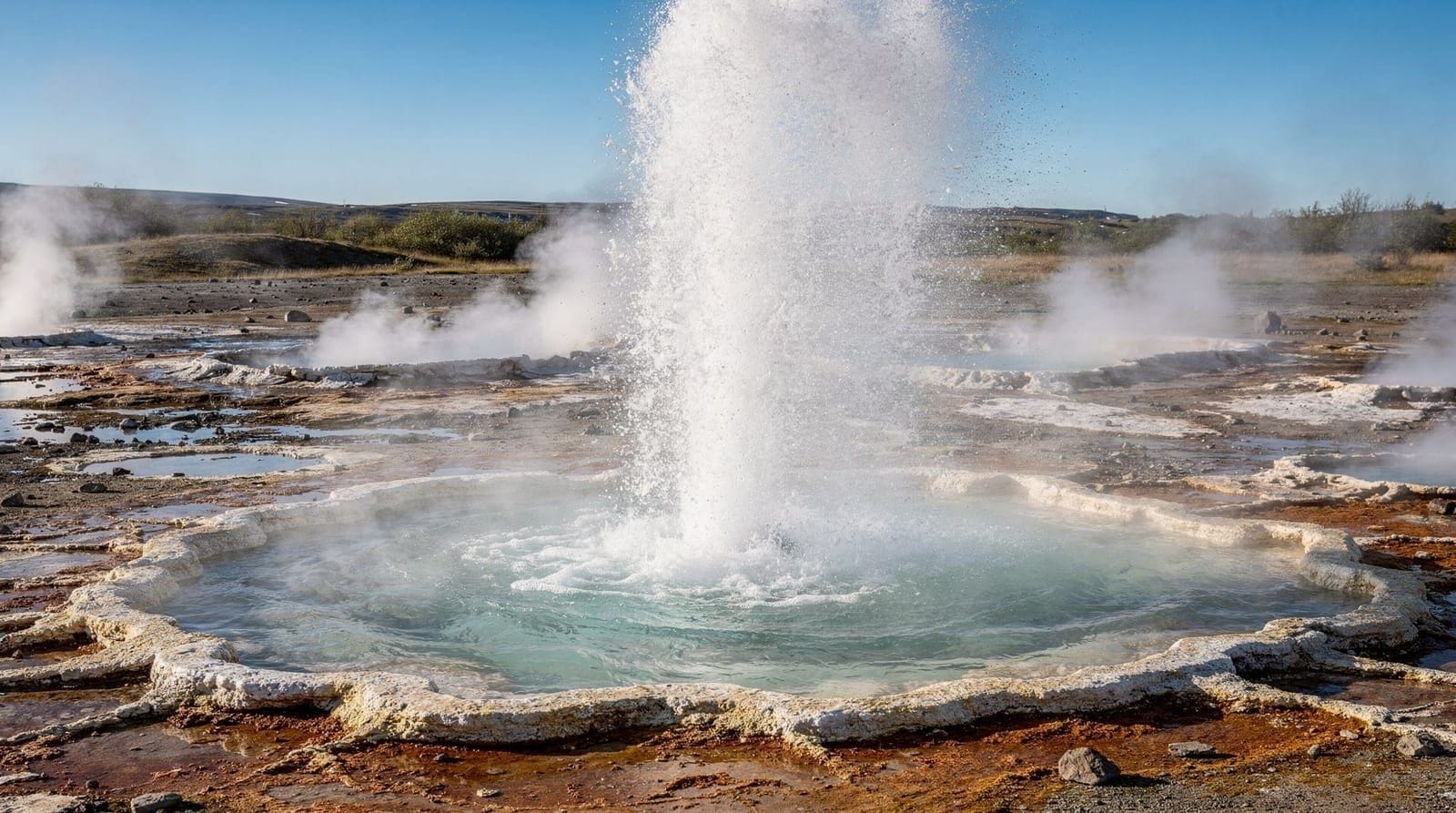
Geysir is the place that gave the English language the word “geyser.” The Great Geysir itself is largely dormant, erupting irregularly. Strokkur, 50 meters away, erupts every 5-10 minutes to 15-40 meters height and is the one everyone photographs.
Honest notes: the path around Strokkur is packed shoulder-to-shoulder at midday in summer. Go early (before 10:00) or late (after 16:00) for manageable crowds. The geothermal ground around the hot spring pools is dangerous — stay on marked paths. The associated gift shop and restaurant (Geysir Center) are predictably overpriced; the hot spring bakery at Efsti-Dalur II farm, 10 km east, is considerably better.
Distance from Þingvellir: ~60 km, about 1 hour. Parking is free.
Gullfoss
Gullfoss (“Golden Falls”) is 9 km east of Geysir on Route 35. The Hvítá river drops in two stages — 11 meters and 21 meters — into a 70-meter-deep canyon. In morning light with the sun at the right angle, spray creates persistent rainbows visible from the upper viewing platform.
The waterfall is impressive in all seasons. In winter, parts freeze into ice sculptures. In spring, snowmelt dramatically increases volume. The path to the lower viewing platform brings you to within a few meters of the falls — plan to get wet. Proper waterproofs are useful.
Parking: 700 ISK. Allow 45-60 minutes. The cafe at the top serves decent soup for ~2,000-2,500 ISK.
Kerið volcanic crater
Kerið is a 3,000-year-old volcanic caldera 55 km southwest of Gullfoss on Route 35, roughly 55 minutes driving. The crater rim offers a walk around the edge; the lake inside is a striking shade of red-green depending on light conditions. Entry is 900 ISK (~€6) — one of the few sites on the loop where you pay at a gate.
Allow 30-45 minutes. It is genuinely worth the small entry fee. Kerið tends to be less crowded than the other three main stops.
Faxi: the waterfall most people drive past
Faxi (also called Vatnsleysufoss) sits a short detour off Route 35 between Geysir and Gullfoss, an easy-to-miss turn that most tour buses skip entirely. It is a wide, low waterfall rather than a dramatic drop, but the salmon ladder on one side and the near-total absence of crowds make it a genuinely pleasant 15-20 minute stop if you are self-driving and have the extra half hour. Free parking, no entry fee.
Self-drive versus guided tour
The Golden Circle route is well-signed in all conditions and does not require a 4x4 in normal weather (Route 35/36 are paved Ring Road-quality roads). A compact rental car is sufficient from June through September. In winter, studded tires are standard on rentals and snow conditions are manageable on the main roads.
Self-drive advantages: set your own pace, stay longer at Þingvellir, leave before the tour buses arrive. See our honest Golden Circle self-drive vs. tour comparison for the full breakdown.
If a guided tour is more practical, the standard full-day buses cover all three main sites and return to Reykjavik by early evening. A full-day Golden Circle tour with Kerið Crater is the most complete option; smaller minibus groups give more flexibility with timing.
| Self-drive | Guided tour | |
|---|---|---|
| Pace | Fully flexible, stay as long as you like | Fixed schedule, set stop lengths |
| Cost | Rental car + fuel + parking fees | ~15,000-25,000 ISK per person |
| Crowd timing | You control arrival times | Group arrives when the bus arrives |
| Commentary | None unless you research beforehand | Guide explains geology and history |
| Winter driving | Requires confidence on icy roads | Someone else handles the conditions |
A small-group Golden Circle tour is a reasonable middle ground if you want guiding without a full-size coach.
Silfra snorkeling as an add-on
The Silfra fissure at Þingvellir is a logical add-on for active travelers. A half-day snorkeling session (dry suit, no experience required, minimum age 12-15 depending on operator) runs about 22,000-28,000 ISK (~€150-190) per person. You snorkel in water so clear you can see 100 meters in every direction.
Book Silfra fissure snorkeling between two continents well in advance — slots are limited and popular throughout the season. See the complete Silfra guide for what to expect.
The Secret Lagoon add-on
The Secret Lagoon (Gamla Laugin) in Flúðir is a geothermal pool that predates the Blue Lagoon by decades — it has been in continuous use since 1891 and lacks the commercial infrastructure of newer spas. Entry is approximately 3,200 ISK (~€22). Water temperature around 38-40°C. A good lunch stop or late-afternoon wind-down after the main sites. Several Golden Circle tours include this as a stop.
Northern lights combination tours
In winter (September through April), some operators run a Golden Circle day tour followed by a northern lights hunt in the evening. The upside: you get both experiences in one day without two separate departure times. The downside: you do the Golden Circle in short daylight hours and return tired for a potentially long night drive. Worth considering if your trip is short and skies are forecast clear.
Timing and crowds
Peak season (June to August) means tour buses at all three main stops from mid-morning to mid-afternoon. Arriving at Þingvellir by 08:30 and finishing the circuit by 15:00 avoids the worst congestion. The Golden Circle in the midnight sun (late May to mid-July) offers extraordinary evening light — some visitors deliberately do it as a late-afternoon into evening trip.
Consult the complete Golden Circle guide for seasonal detail and the Iceland cost guide for a realistic budget per person. For a structured itinerary incorporating the Golden Circle, see the 3-day Reykjavik itinerary.
Top experiences
Bookable activities with verified prices and instant confirmation on GetYourGuide.