Jokulsarlon Glacier Lagoon: Complete Guide for Day-Trippers
From Reykjavik: Jökulsárlón Glacier Lagoon Full-Day Trip
Duration: 14 hours
How far is Jokulsarlon from Reykjavik?
Approximately 378 km, about 4.5-5 hours each way on Route 1. This is Iceland's longest standard day trip — a dedicated full day of 14-16 hours. Many travellers prefer a 2-day itinerary with an overnight near the lagoon.
What Jokulsarlon actually is
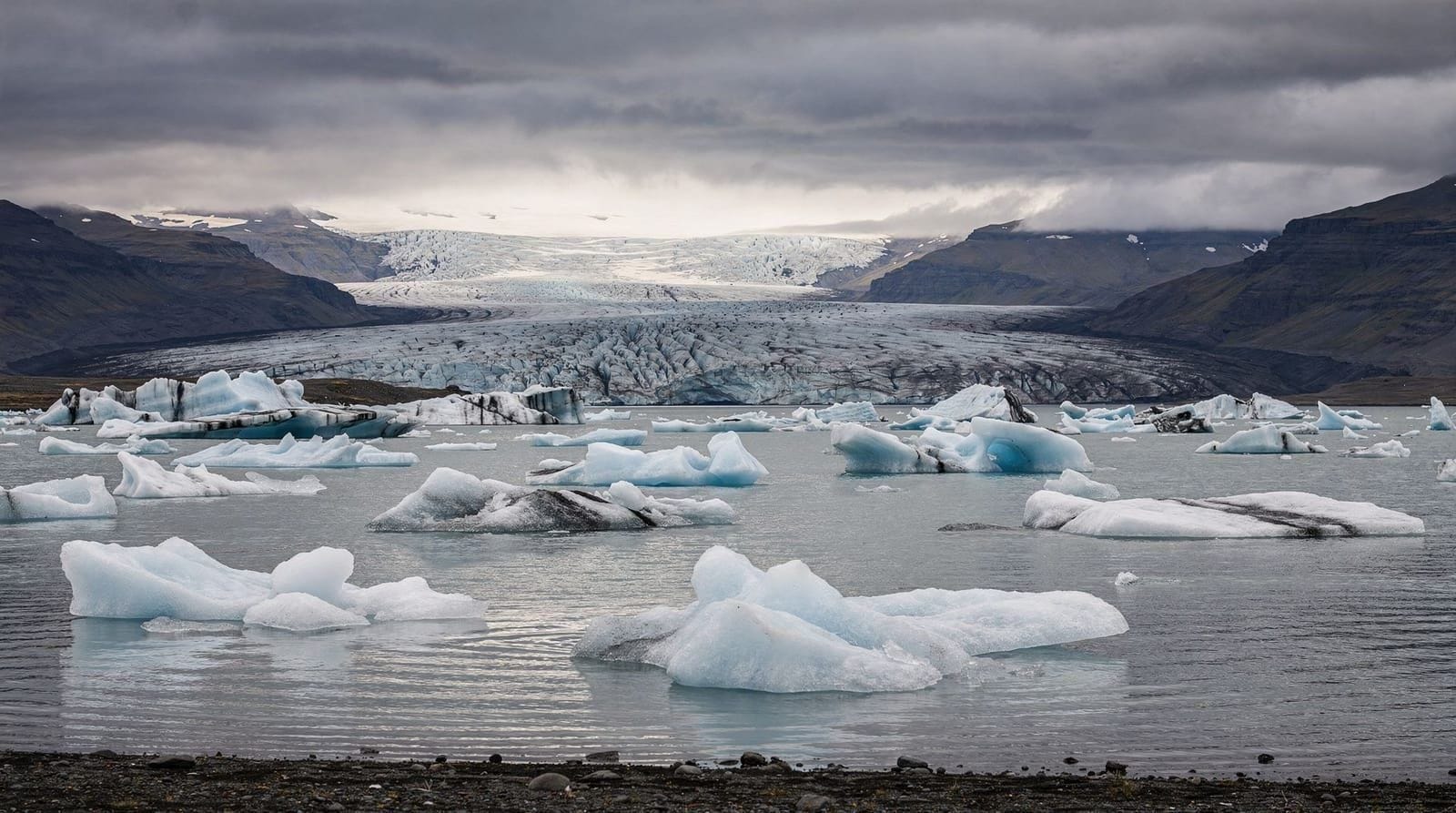
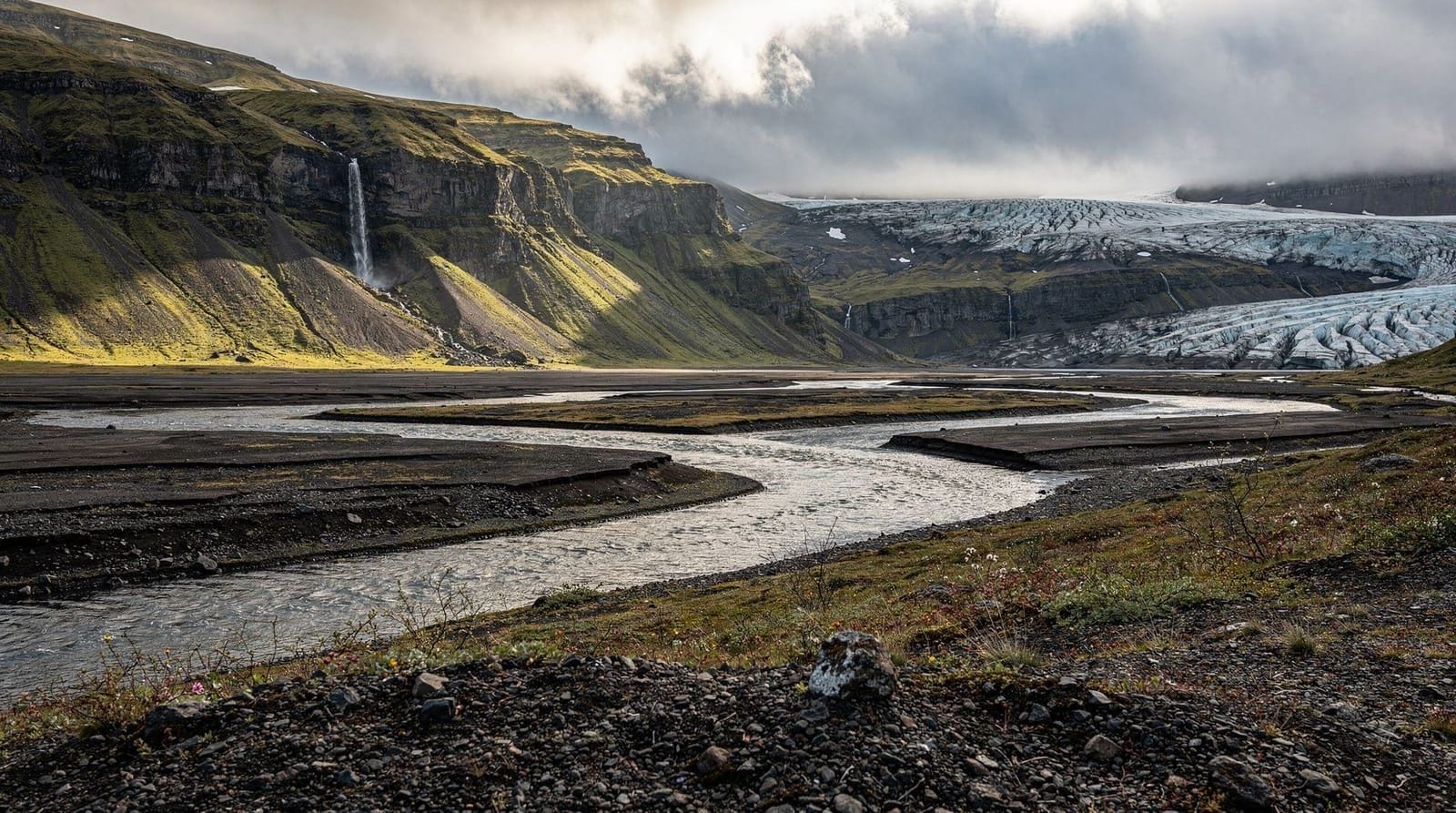
Jökulsárlón (Glacier River Lagoon) is a glacial lagoon at the toe of Breiðamerkurjökull, an outlet glacier of Vatnajökull. The lagoon is relatively young by geological standards — it formed in the 1930s when the glacier began retreating and meltwater pooled at its base. Since then it has expanded dramatically as the glacier continues to retreat.
The result is a body of water full of icebergs calved from the glacier face. The bergs range from house-sized to car-sized, coloured white, blue, and occasionally black from trapped volcanic ash. They drift slowly toward the lagoon outlet and out to sea, depositing on Diamond Beach on the other side of the highway.
The scale is what surprises first-time visitors. Looking at photographs of Jökulsárlón does not prepare you for standing beside it. The glacier face towers above the lagoon, actively calving — you can hear the cracks and occasionally see an iceberg break free. The silence, except for that sound, is profound.
The lagoon sits directly on Route 1, the Ring Road, making it easy to access but not close to anything else. The nearest town of size is Höfn, about 80 km east. Jökulsárlón as a destination is covered in more depth on the destination page.
| Where | Route 1, ~378 km / 4.5-5hrs east of Reykjavik |
| Cost | Free shore access; boat tours around 7,000-9,500 ISK |
| Time needed | 2-3hrs at the lagoon; a full day or overnight round trip |
| Getting there | Self-drive or a dedicated full-day tour from Reykjavik |
| Best time | June-August for boats and long daylight; Nov-March for ice caves |
The honest logistics: this is Iceland’s longest day trip
From central Reykjavik to Jökulsárlón is approximately 378 km. In normal conditions, Google Maps estimates 4.5-5 hours. In winter with reduced speed limits, icy roads, or traffic through the South Coast, 5-5.5 hours is realistic.
A return trip is therefore 9-10 hours of driving, before any stops. Add 2-3 hours at the lagoon, 2 hours at Diamond Beach and lunch, and potentially 1-2 hours at Skaftafell or other stops on the route, and you are looking at a 14-17 hour day.
This is doable in summer with its near-endless daylight — see midnight sun in Iceland for how to use that light. In winter with only 5-6 hours of daylight, it is very difficult to justify as a single-day round trip — you spend most of the drive in darkness.
The alternative most travellers find more satisfying: two days, with an overnight in Vík or Höfn. Day 1 covers the South Coast (Seljalandsfoss, Skógafoss, Reynisfjara). Day 2 covers Jökulsárlón, Diamond Beach, and optionally Skaftafell or an ice cave. The Iceland 7-day itinerary uses exactly this structure. See also the Iceland winter 4-day itinerary for how to reach the lagoon in cold conditions.
Diamond Beach: worth every step
Diamond Beach sits immediately across Route 1 from the lagoon entrance. Icebergs that exit the lagoon via the outlet river wash up here and melt slowly on the black sand. The ice is extraordinarily clear — centuries-old compressed glacial ice with air bubbles trapped inside. The transparency against the black sand is unlike anything else.
The beach changes daily. After large iceberg movements in the lagoon, new pieces wash up overnight. After days of south winds, pieces pile up at one end of the beach. No two visits look the same.
Do not be tempted to climb large ice pieces. They are unstable, they are on a beach with wave action, and people have been seriously injured. The beach itself has the same sleeper wave risks as Reynisfjara — stay back from the water.
Dawn and dusk light (or the extended golden hour of Icelandic summer evenings) creates extraordinary photography here. If you are staying overnight nearby, plan to be at Diamond Beach at first light.
From Reykjavik: Jokulsarlon Glacier Lagoon and Diamond Beach TourBoat tours: zodiac vs amphibious truck
Two types of boat tour operate at Jökulsárlón from May to October.
Zodiac tours are inflatable boats that seat 10-12 people and go among the icebergs at water level. The guides cut engines beside large bergs and let you take in the silence and scale. The zodiac can approach very close to the glacier face when conditions allow. Tours last 30-45 minutes. Cost around 7,000-9,500 ISK. The zodiac perspective — looking up at icebergs — is very different from the shore perspective.
Amphibious truck tours use military-style trucks that drive into the lagoon from the shore and float. They are larger and slower than zodiacs and reach less interesting positions, but they operate in more weather conditions and run in both summer and winter. A good option for those who cannot access a zodiac due to mobility concerns.
Both tours run from a booking desk next to the car park on the lagoon’s north shore. In peak summer (July-August) queues form — arrive before 10 a.m. or after 4 p.m.
Reykjavik: Glacier Lagoon Boat Ride and Diamond Beach Day TourIce caves near Jokulsarlon: winter only
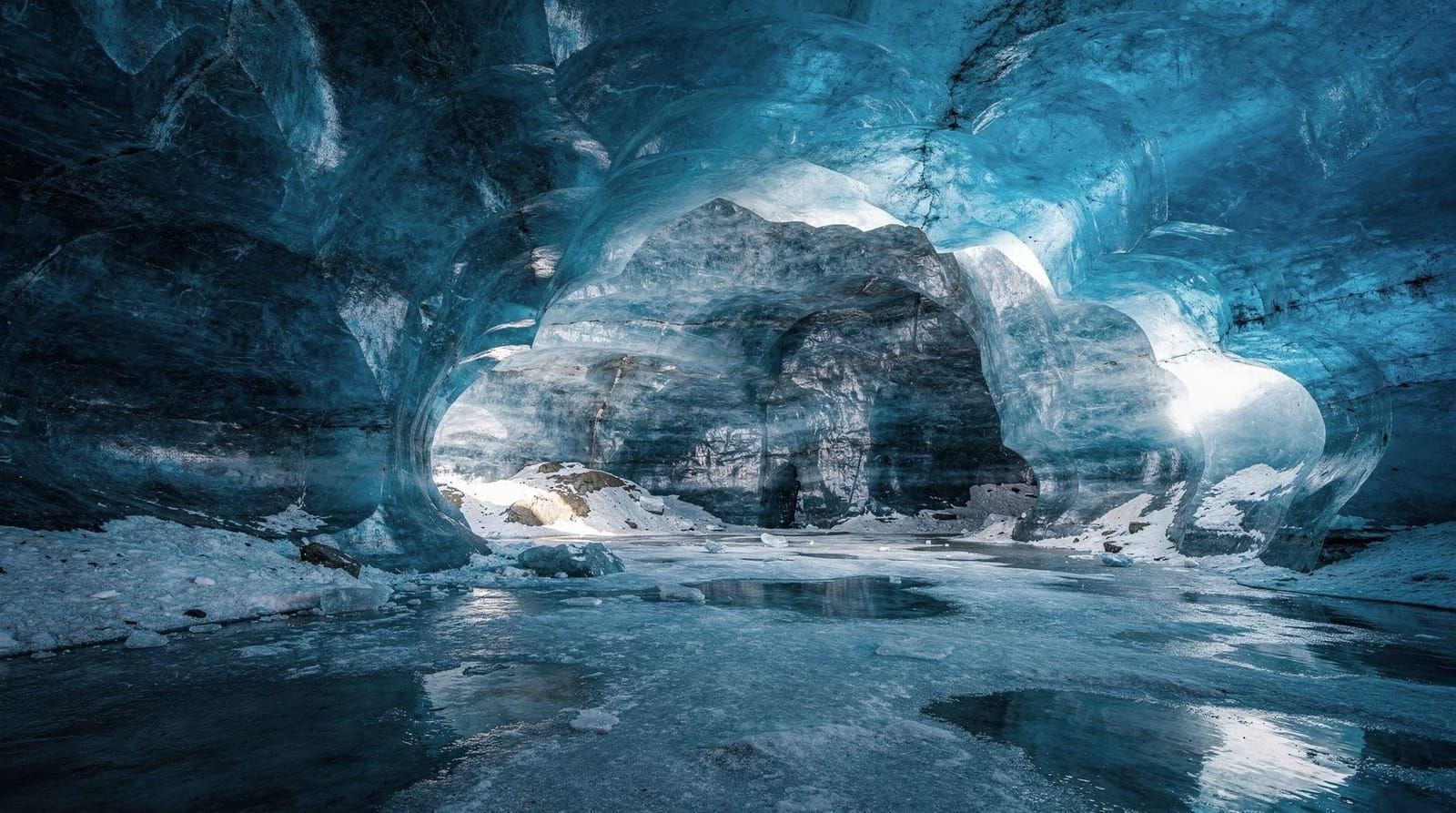
The natural blue ice caves within Vatnajökull glacier are one of Iceland’s most extraordinary winter experiences. They form annually inside the glacier and are only safely accessible from approximately November to March. Tour operators based near Jökulsárlón run super jeep tours from the lagoon car park into the glacier, entering ice caves with vivid blue walls formed by centuries of compressed ice.
Blue is not just a description. Inside a Vatnajökull ice cave, the light genuinely looks like being submerged in deep water. The ceiling and walls glow blue from within. The experience is unlike anything else on earth.
These tours book up months in advance for the November-February period. If winter Iceland is your plan and you want ice caves, book before you book your flights. Operators cancel for safety if conditions change that morning; reputable ones offer free rebooking. See the glacier hikes and ice caves guide for full detail on what to expect. The northern lights season guide is also relevant for planning a winter trip to this area, since the drive back after dark offers aurora potential.
Skaftafell: glacier hiking on the way
Skaftafell, 45 minutes west of Jökulsárlón, is a visitor centre within Vatnajökull National Park and the main base for glacier hiking in the area. Two hiking glaciers — Svínafellsjökull and Falljökull — are accessible from the centre on guided tours, such as this Vatnajökull glacier hike from Skaftafell. Beginner glacier hikes of 2.5-3 hours are suitable for all fitness levels.
If you are making the long drive to Jökulsárlón, adding a glacier hike at Skaftafell is highly efficient — you pay the driving cost once and do both. This works best as an overnight trip: hike the glacier in the morning of day 2, then visit the lagoon in the afternoon.
Fjallsarlon: the quieter neighbour
Fjallsárlón is a smaller glacial lagoon about 15 km west of Jökulsárlón, fed by a different outlet glacier of Vatnajökull. It receives far fewer visitors than its famous neighbour and has a different aesthetic — the glacier face is closer to the viewpoint, the lagoon is smaller, and the icebergs are often more colourful.
Access from a well-marked car park off Route 1. A short walk leads to the lakeside. Free entry. Boat tours also operate here (much smaller boats, fewer people). Worth a 30-minute stop if you are combining with Jökulsárlón. The drive between the two takes 15 minutes.
Reykjavik: South Coast and Jokulsarlon Sightseeing TourWhat to bring and wear
The same rules apply as for any South Coast day trip: waterproofs, layers, good walking shoes. At the lagoon specifically the wind can be very strong off the glacier — a windproof outer layer is not optional.
In winter: serious cold weather gear. The wind chill at the lagoon in January is brutal. Thermal base layers, mid-layers, insulated windproof jacket, waterproof trousers, gloves, hat. If you are going on an ice cave tour, the operator provides additional gear.
Photography: standard camera gear works well. A wide-angle lens is useful for the lagoon overview. A polarising filter reduces glare off the ice. Early morning and late afternoon light is dramatically better than midday — plan your arrival accordingly if photography matters to you.
Planning your visit: when to go
Summer (June-August): Maximum daylight, boat tours fully operational, Diamond Beach is usually well-stocked with ice. Crowds at the lagoon are significant in July. Start driving by 7 a.m. from Reykjavik.
September-October: Shoulder season with reduced crowds, excellent light for photography, ice cave tours not yet open. Pleasant balance.
November-March: Winter. Ice caves are open (the main reason to come in winter). Dramatically shorter daylight limits what you can see in a single day from Reykjavik. An overnight stay is essentially required. Northern lights are possible. The glacier landscape in snow is extraordinary.
April-May: Late ice caves (sometimes into April), fewer crowds, rapidly increasing daylight in May. Good shoulder season option.
The best time to visit Iceland guide has a full breakdown of seasonal trade-offs.
One day or two: an honest comparison
| One-day round trip | Two-day with overnight | |
|---|---|---|
| Driving | 9-10hrs round trip, exhausting | Split across two calmer days |
| Time at lagoon | 1.5-2hrs, rushed | 2-3hrs, unhurried |
| South Coast stops | Minimal or skipped | Full Seljalandsfoss/Skógafoss/Reynisfjara day |
| Daylight risk (winter) | High — most of the drive in darkness | Low — driving spread over daylight windows |
| Cost | Lower (one hotel night saved) | Higher (extra accommodation) |
| Best for | Summer, tight schedules, no interest in Skaftafell | Winter, photographers, anyone wanting Diamond Beach at dawn |
The one-day version is genuinely workable in summer given 20+ hours of daylight, and many tours run it successfully. In winter, the honest recommendation is the two-day version — see the Iceland winter 4-day itinerary for how that overnight fits a broader trip.
Combining with a ring road trip
For travellers doing a full Ring Road circuit rather than an out-and-back day trip, Jökulsárlón sits naturally on day 3 or 4 depending on pace, between the South Coast and the East Fjords. Rather than driving all the way back to Reykjavik, continuing east or looping the full Ring Road avoids retracing the same 750+ km round trip entirely. The Iceland 7-day itinerary from Reykjavik shows exactly where this fits for travellers with a full week, and the South Coast complete guide covers everything you would pass on the way out.
Frequently asked questions about Jokulsarlon glacier lagoon Iceland
Can I touch the icebergs?
At Diamond Beach you can touch ice pieces on the shore (not the large unstable ones). From the boat tour, guides sometimes allow touching smaller bergs from the zodiac. Do not wade into the lagoon to reach them — the water is glacially cold and the current near the outlet is dangerous.
How long should I spend at Jokulsarlon?
Allow 2-3 hours at the lagoon and Diamond Beach combined, more if you do a boat tour. The lagoon can be mesmerising and people often stay longer than expected.
Is there anywhere to eat near Jokulsarlon?
The car park has a small cafe in summer. Höfn (80 km east) has restaurants and is known for langoustine. Kirkjubaejarklaustur (45 km west) has a petrol station and basic food. Bring substantial snacks for the day.
Can I walk on the glacier at Jokulsarlon?
Not independently. With a guided tour from Skaftafell or directly from operators at the lagoon, yes. Never walk onto any glacier without a certified guide and crampons.
Is Jokulsarlon free to visit?
The lagoon shore and Diamond Beach are free to access. Car parking is free. Boat tours cost 7,000-9,500 ISK. Ice cave tours in winter cost substantially more.
How does Jokulsarlon appear in films?
Jökulsárlón has appeared in two James Bond films (A View to a Kill, Die Another Day), Tomb Raider, Batman Begins, and numerous other productions. The landscape is considered unreplaceable by filmmakers.
What is the best way to visit as part of a ring road trip?
The lagoon is on Route 1 and unavoidable on any ring road itinerary. Most people treat it as the emotional highlight of the east-coast drive. The Iceland 7-day itinerary includes it on day 4 of the ring road circuit.
Top experiences
Bookable activities with verified prices and instant confirmation on GetYourGuide.