Iceland Winter 4-Day Itinerary: Ice Caves, Auroras & Black Beaches
Jökulsárlón: The Original Ice Cave Tour on Vatnajökull
Winter Iceland is a different country from the summer version. You get 5–6 hours of usable daylight in January, roads that can close without notice, and the very real possibility of standing in a crystal-blue glacier cave while aurora dances overhead after dark. It requires more planning than a summer trip, but the experiences it offers are genuinely unlike anything else.
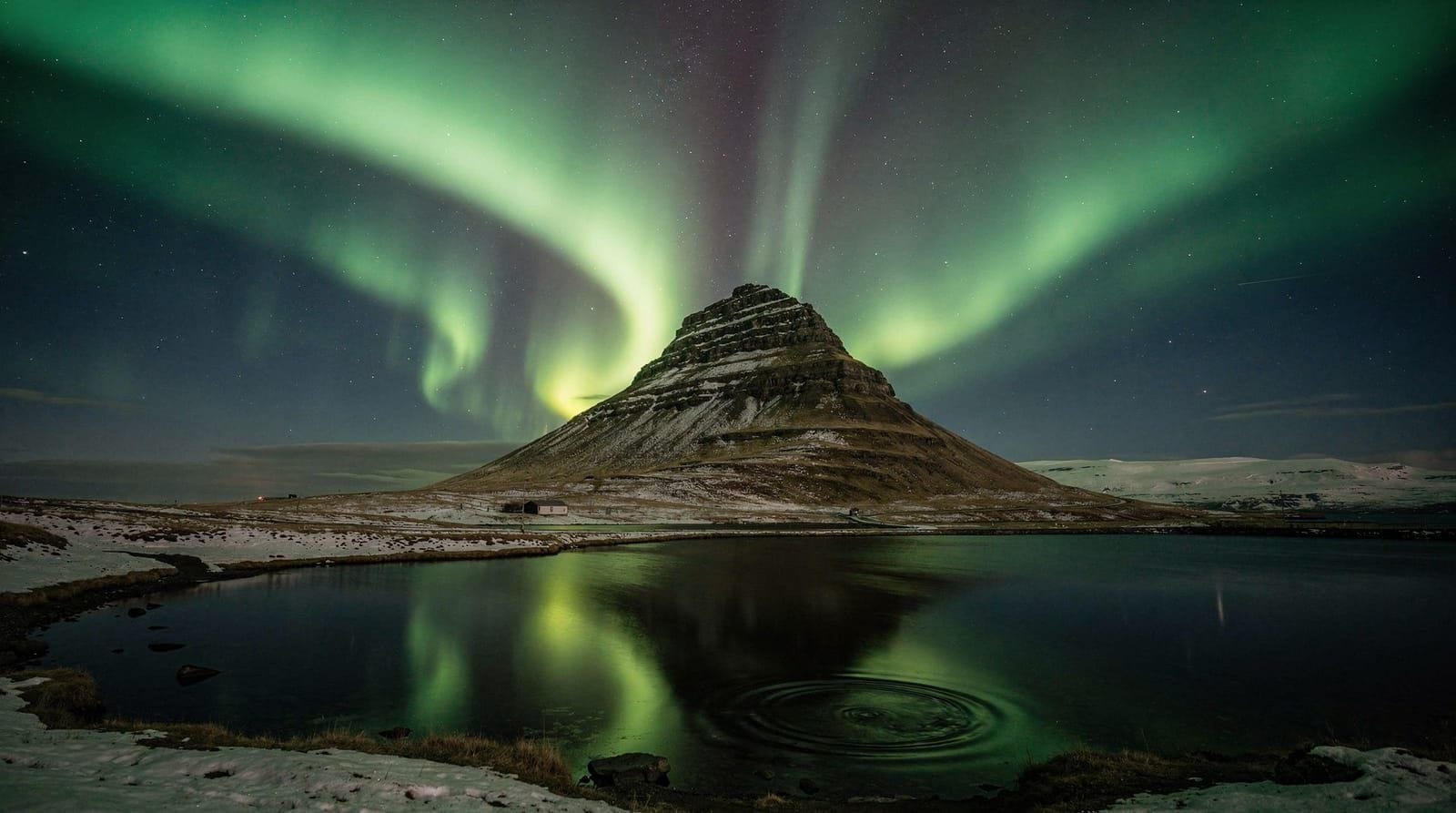
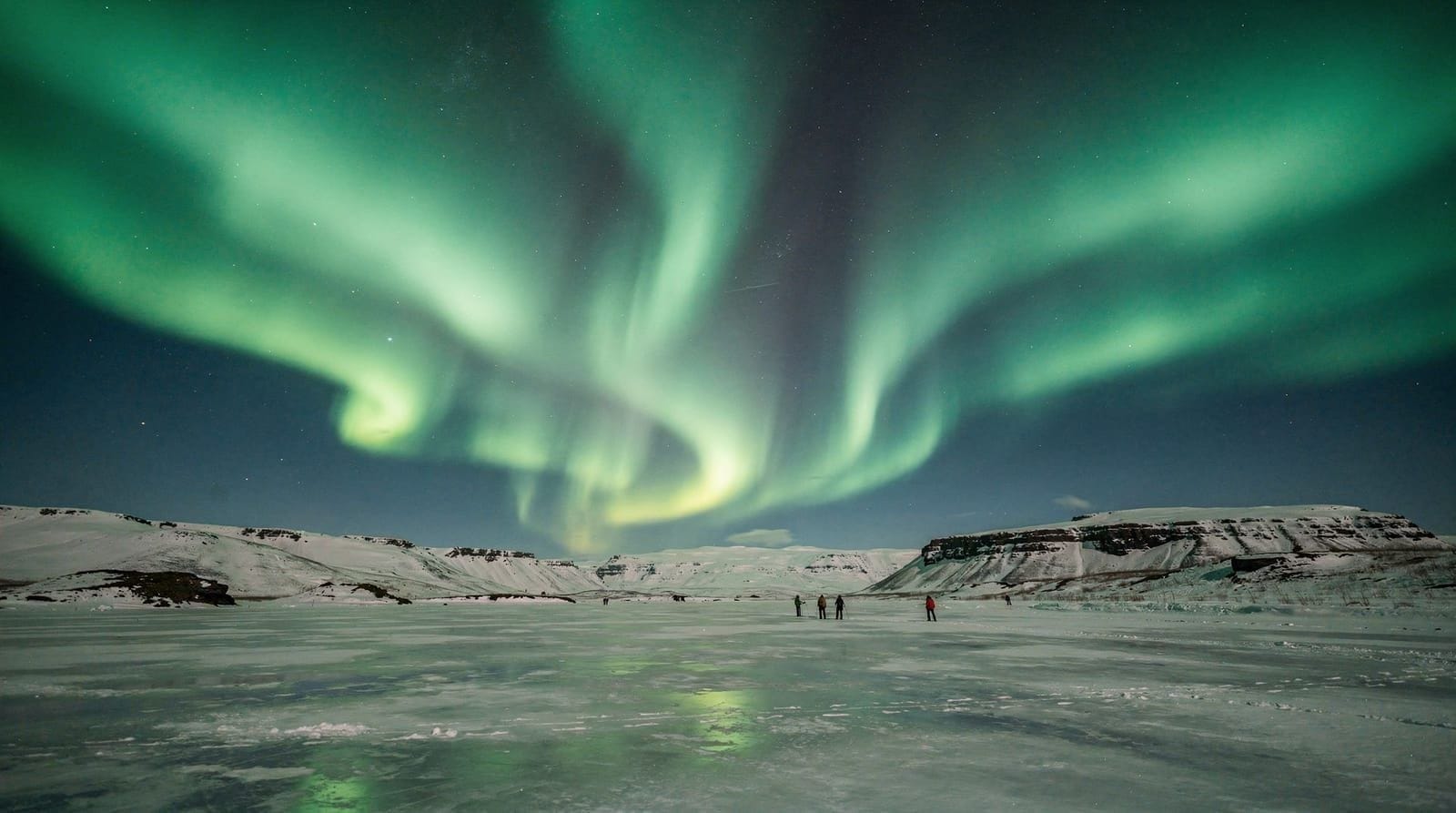
This itinerary is built around winter’s two signature experiences: the Vatnajökull blue ice caves (October–March only) and the Northern Lights (September–April). Both require clear skies that Iceland’s weather does not guarantee. This is not a marketing claim — it is a realistic constraint. Build your schedule with flexibility: try for aurora multiple evenings, book the ice cave early in your trip so you have a buffer if conditions force a cancellation.
Winter prerequisites: Snow tyres are legally mandatory November–April. A 4WD is recommended east of Vík in January–February when snow is deepest. Warm layers are not optional — standing in a field at midnight in December in Iceland is genuinely cold. See what to pack for Iceland.
| Where | Reykjavik, South Coast, Jökulsárlón, Golden Circle |
| Cost | Around 130,000–180,000 ISK (~€880–1,220) per person, excl. flights |
| Time needed | 4 days / 3 nights, incl. 1 overnight in Höfn |
| Getting there | 2WD with winter tyres or 4WD recommended east of Vík |
| Best time | Oct–Mar for ice caves; Sep–Apr for Northern Lights |
Day 1: Arrive Reykjavik + First Aurora Attempt
Arrive. Check in. Resist the urge to drive anywhere — winter driving requires a clear head, and you have four days ahead.
Afternoon: City Context
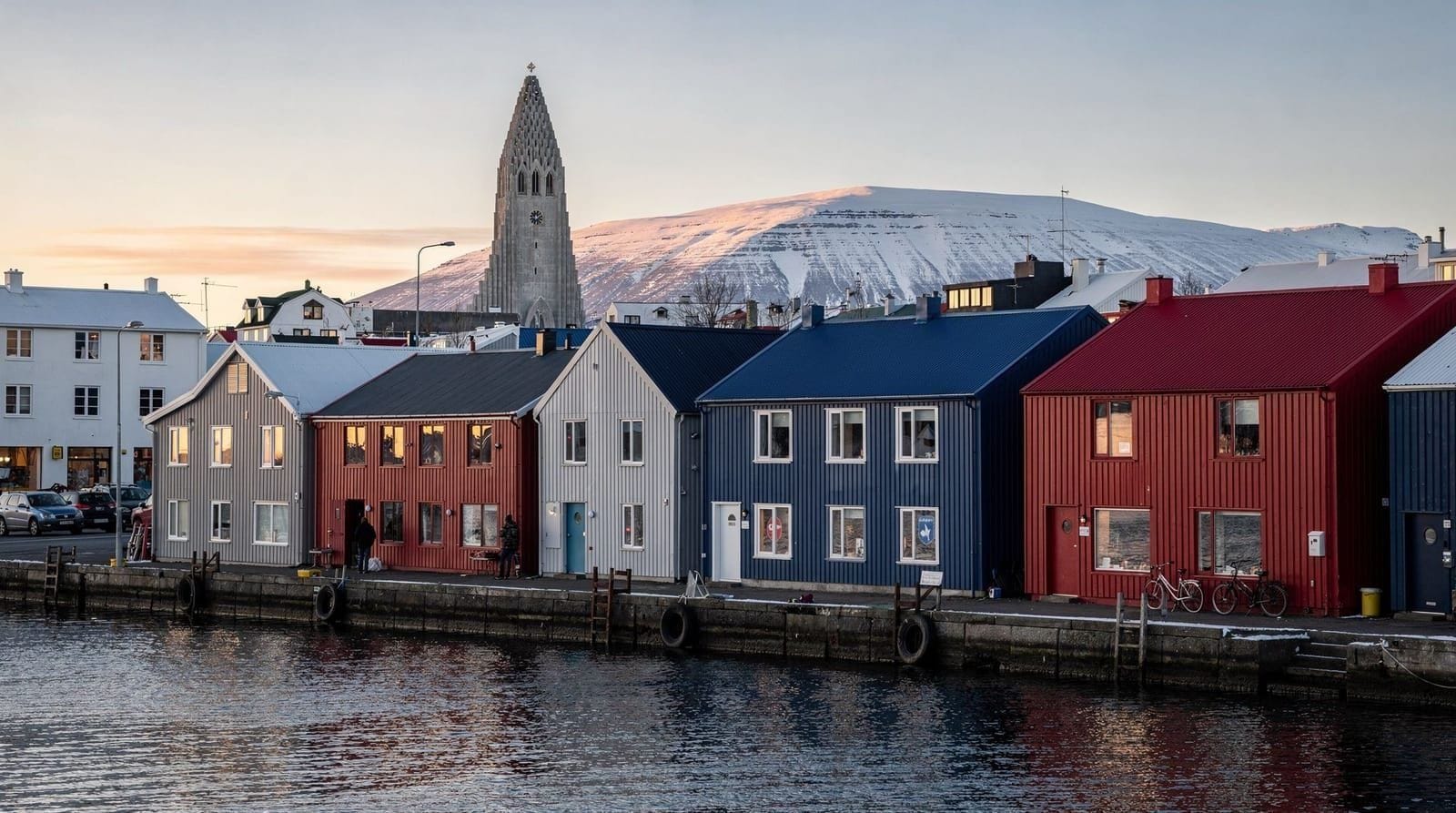
Hallgrímskirkja tower (1,100 ISK / ~€7): The best orientation view of the city and the bay. In winter the light at 2 p.m. is already the colour of golden hour; by 4 p.m. it’s dark. Make the most of the brief afternoon.
Aurora Reykjavik museum (1,500 ISK / ~€10) at the Old Harbour is an excellent primer on Northern Lights science, photography settings, and history. One hour well spent before your first aurora hunt. It covers why the lights happen, what KP index means, and which camera settings produce the best results. See Reykjavik museums and attractions.
Perlan (4,100 ISK / ~€27) is worth considering for the Northern Lights planetarium show (15 min) and the indoor ice cave — it gives you context for what you’ll see at Vatnajökull on Day 3.
Evening: Northern Lights Tour
Book before you fly. The operators monitor weather forecasts throughout the day. If the forecast is poor, they cancel and offer a rebooking — this is why a lifetime guarantee matters. On a 4-night trip, you might get one good aurora night, you might get three. You might get zero. That is the reality.
Tours depart around 9:30–10:30 p.m. and drive 30–60 km from Reykjavik to find dark skies and (hopefully) clear sky. The guide monitors conditions on the way and stops when the aurora is visible. Most sightings are 30–90 minutes at the viewing site.
Northern Lights tour with lifetime guarantee from ReykjavikRead best Northern Lights tours from Reykjavik for a comparison of bus tours vs boat tours vs super-jeep tours. A bus tour is the most reliable for most visitors; a boat tour gives you unobstructed horizon views but is weather-dependent on two factors (sky and sea). See Northern Lights season guide for realistic forecasting.
Warm up between tour and bed: The Sky Lagoon is open until midnight and is 20 minutes from central Reykjavik — soaking outdoors while watching the aurora over the ocean is its own experience. Compare: Blue Lagoon vs Sky Lagoon.
Day 2: South Coast in Winter Light
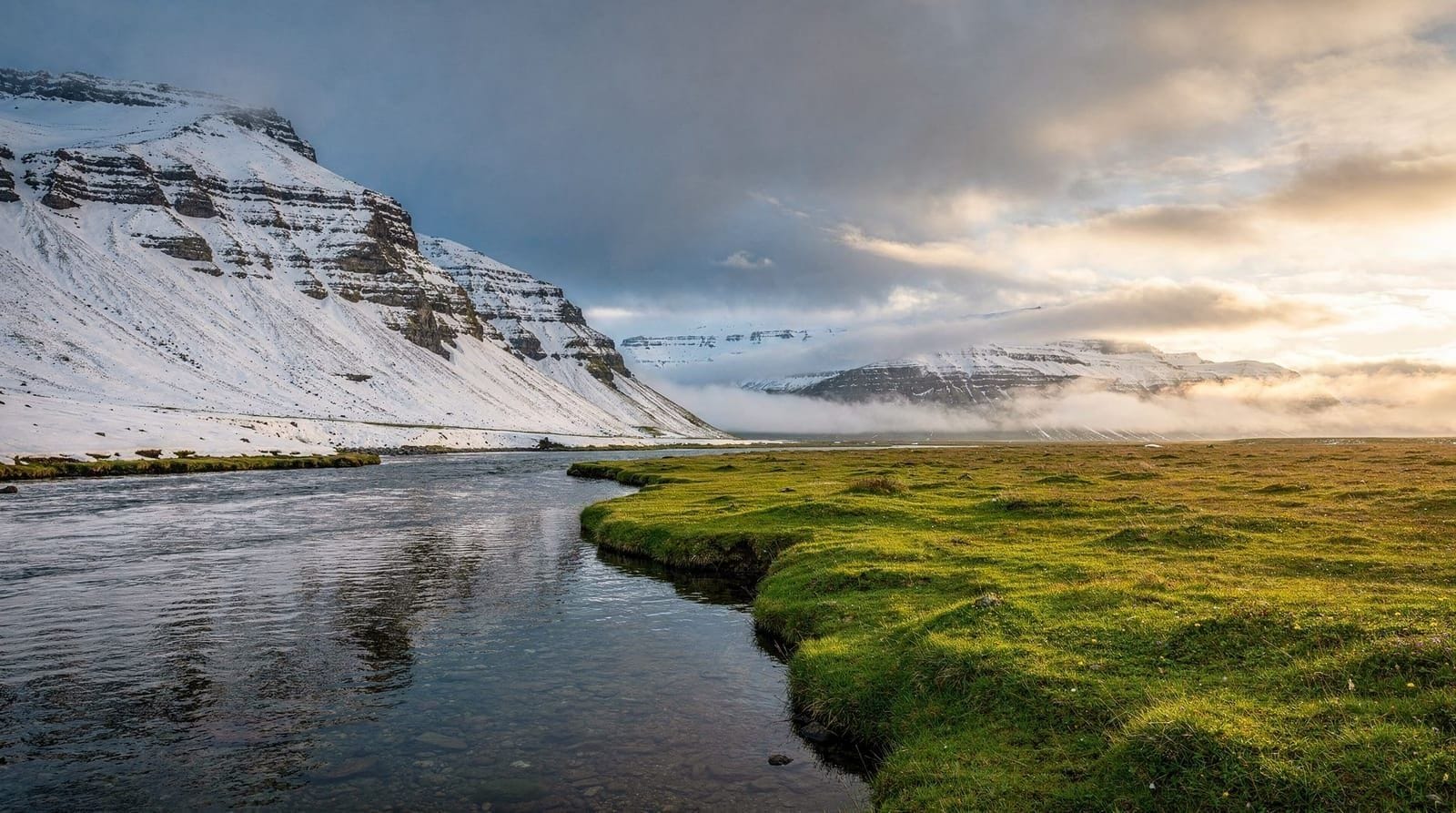
The South Coast in winter offers a strikingly different experience from summer — lower, warmer-coloured light that never climbs high, fewer tourists, and the possibility of snow-capped mountains above waterfalls that run at full volume even in January.
Realistic daylight window: In January, sunrise is around 10:30 a.m. and sunset at 4 p.m. You have about 5 hours of good light. Choose your stops carefully — this is a two or three stop day, not five.
Depart 8 a.m. to be at Seljalandsfoss by 9:30 a.m. with the first light.
Seljalandsfoss
The path behind the waterfall may be iced or officially closed in winter. Check on arrival — the path closes when ice makes it dangerous. If open: crampons or ice cleats are essential (bring your own or rent from nearby). The falls in the low winter light are extraordinary even from the front.
Parking: 750 ISK (~€5).
Gljúfrabúi
750 m east of Seljalandsfoss. A hidden waterfall inside a canyon slot, accessed through a shallow stream. Ankle-deep water in summer; can be frozen edges in January but usually passable. Almost no one goes here. See South Coast complete guide.
Skógafoss
In a hard winter, ice formations build up around the base and on the surrounding rocks. The step count to the top (527) is the same in any season. The golden winter light hitting the falls from a low angle around 1 p.m. is the best photography moment.
Katla Ice Cave
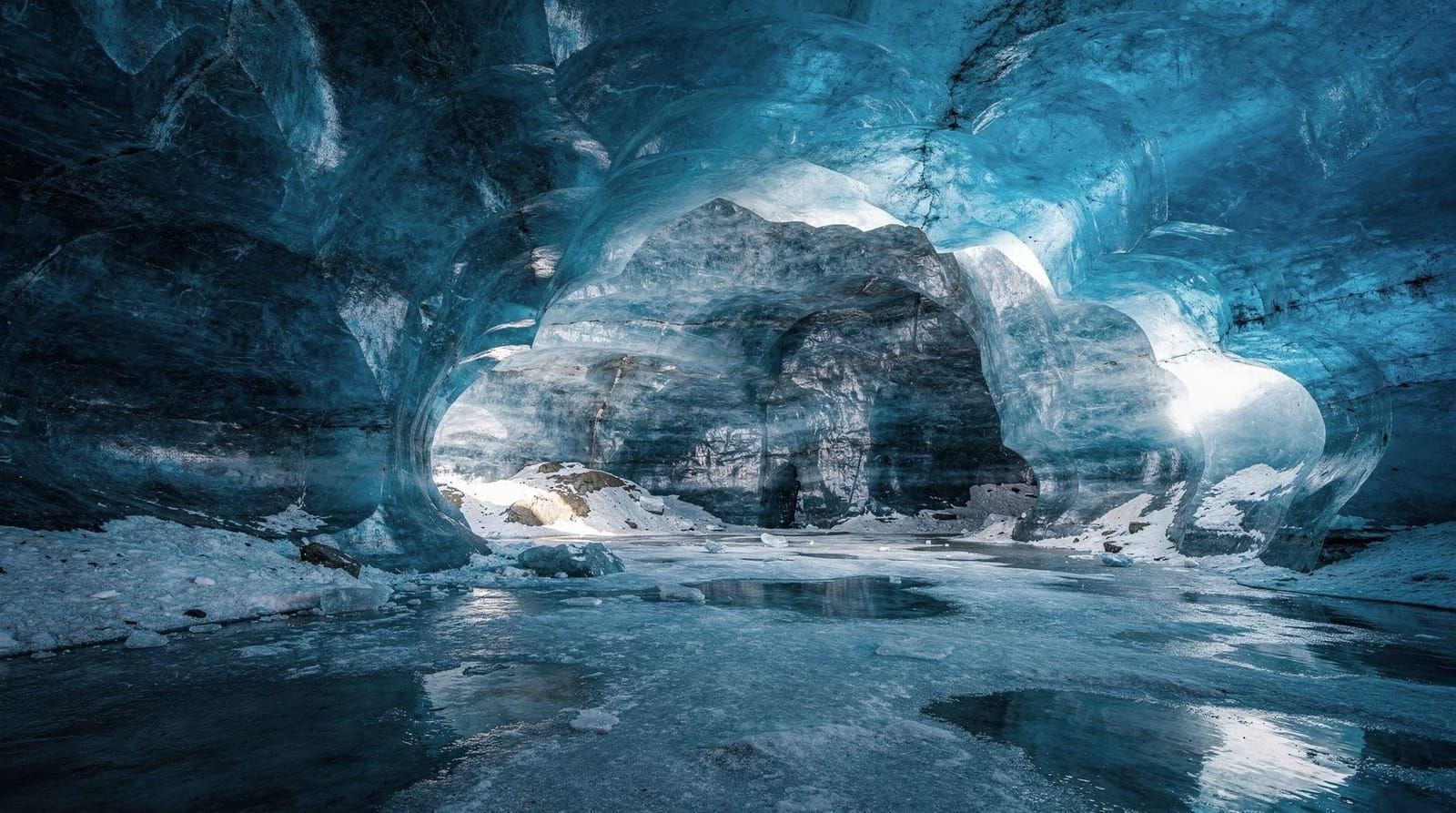
The afternoon option on Day 2 is the Katla ice cave, near Vík, inside the Mýrdalsjökull glacier. This is a separate experience from the Vatnajökull blue caves on Day 3 — Katla is smaller, more accessible, and contains dramatic black ash layers from historical Katla eruptions. It’s accessible as a day trip from Reykjavik (10–11 hours total including driving) and is a good winter introduction to ice caves without the full eastern drive.
Katla ice cave and South Coast day tour from ReykjavikReynisfjara Black Sand Beach
Winter waves at Reynisfjara are more powerful than summer waves — the North Atlantic is roughest in winter. The warning signs are real; the sneaker wave danger is year-round but amplified in winter conditions. The basalt columns are dramatic in any season. Stay well back from the water (40+ m in winter).
Return to Reykjavik. Second aurora attempt tonight — tour operators will have updated the forecast.
Day 3: East to Jökulsárlón — Vatnajökull Blue Ice Cave
This is the main event of the winter itinerary. The Vatnajökull blue ice caves are only accessible October–March, and only during safe ice conditions. They are not artificial, not tourist-built — they are natural meltwater channels inside Europe’s largest glacier, their walls compressed to a deep blue by centuries of ice accumulation.
Drive from Reykjavik to Jökulsárlón: 4.5–5 hours (380 km). Start no later than 7 a.m. in winter — you need to arrive during daylight for the ice cave afternoon tour.
Winter road warning: Route 1 to Jökulsárlón is generally passable in a 2WD with winter tyres in November–March, but closes after heavy snowfall and during blizzards. Check road.is (Icelandic Road and Coastal Administration) before departing. If the road is yellow (caution) or orange, reduce speed and proceed carefully. Red means closed — do not attempt it.
Option A (independent drive): Drive east on Route 1. Stop briefly at Skaftafell national park (40 min, free walks from carpark). Arrive Jökulsárlón by early afternoon for the glacier lagoon, then the ice cave tour at 2 p.m.
Option B (guided tour): Long guided tours depart Reykjavik at 7–7:30 a.m. and return ~11 p.m. They include transport, ice cave entry, and Diamond Beach. No logistics stress.
Jökulsárlón Glacier Lagoon in Winter
The amphibious boat tour doesn’t run in winter (boat tours are April–October). But the lagoon in winter has its own extraordinary atmosphere: the icebergs are illuminated by the low-angled light, the lagoon is sometimes partially frozen at the edges, and there are almost no tourists. The silence is remarkable.
Diamond Beach in winter: the ice chunks wash ashore against the black sand in the same way as summer but the light is more dramatic. Sunrise at Jökulsárlón in February is one of the most photographed phenomena in Iceland. If you’re here at the right time, it will justify the drive alone.
See Jökulsárlón glacier lagoon guide.
Vatnajökull Blue Ice Cave
Tours run from the Jökulsárlón carpark (typically 10 a.m. and 2 p.m. slots). A super-jeep drives you onto the glacier to the cave entrance; the guided walk inside takes 1–1.5 hours. The blue walls are the result of compressed ancient ice — the deeper into the glacier, the fewer air bubbles, the deeper the blue.
Book months in advance. Spaces for December–February fill by September. The caves are monitored daily for safety — tour operators cancel if the ice structure is unsafe. If your booked tour is cancelled due to unsafe conditions, you get a refund. If weather cancels your travel, cancellation terms vary by operator.
Original Vatnajökull ice cave tour on Vatnajökull glacierSee glacier hikes and ice caves for the full booking guide and what to wear inside the cave.
Northern Lights from the east: Far from Reykjavik’s light pollution, the area around Jökulsárlón and Höfn has some of the darkest skies in Iceland. If the aurora is active on Day 3 night, you will see it from the carpark or your accommodation without a tour. The Veðurstofa Iceland app (official met office) gives hourly cloud cover and KP forecasts.
Overnight in Höfn. Famous for langoustines (Icelandic lobster); Pakkhús restaurant is the local favourite.
Day 4: Golden Circle + Return
Drive back to Reykjavik this morning (4.5 hours on Route 1). Do the Golden Circle on the way for an efficient return day.
Route: Höfn → Vík → Hvolsvöllur → Þingvellir → Geysir → Gullfoss → Reykjavik. This is ~500 km and a long day, but the stops are well-spaced.
If you’re tired after Day 3, cut the Golden Circle short and drive directly to Reykjavik — do just Þingvellir (most distinctive) or just Geysir/Gullfoss.
Þingvellir in Winter
In December–February, Þingvellir is sometimes snow-covered, the rift walk is iced, and the site has almost no visitors. Bring ice cleats if you have them. The Silfra fissure still runs guided snorkel tours year-round — the water temperature doesn’t change much from summer (2–4°C), but the air is colder and the walk to the entry point can be icy. See Silfra snorkelling and diving.
Geysir and Gullfoss in Winter
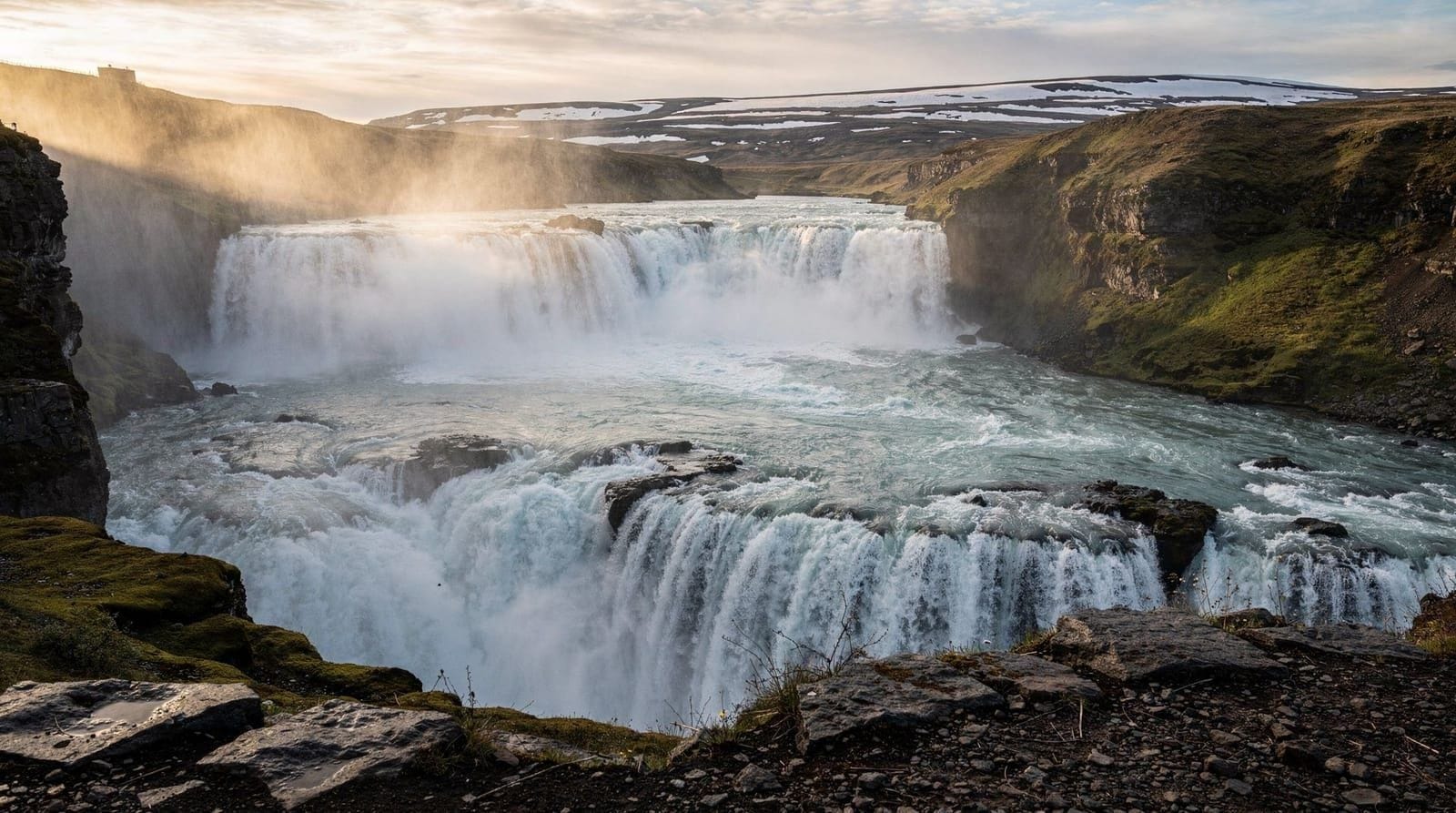
In hard winters, partial ice formations appear around the edges of Gullfoss. Strokkur erupts in all weather. The Geysir area often has frost and steam in the morning light that makes for dramatic photography.
See the full Golden Circle complete guide.
Return to Reykjavik
If flying tomorrow morning: final evening in the city. Third or fourth aurora attempt if conditions look good; if not, Sky Lagoon until midnight.
If flying today: head directly to Blue Lagoon (45 min from Reykjavik, on Route 41 toward Keflavík) as a final stop. The lagoon in winter is at its most dramatic: the steam rises visibly against the cold air, the lava landscape is dramatic, and the contrast of warm water with cold air is physically extraordinary. Book in advance. See Blue Lagoon complete guide.
Transfer logistics: Keflavík airport to Reykjavik.
Checking the Aurora Forecast Before You Commit
Don’t just check the KP index the night of — look at the trend over your whole trip. Our Northern Lights forecast update tracks current solar activity and season-level expectations, which is useful context before you decide how many evenings to keep free for aurora attempts versus other plans. Combine it with the daily cloud-cover forecast, since a high KP index with 100% cloud cover still means nothing visible.
Packing correctly matters more on a winter trip than any other time of year — the difference between an enjoyable ice cave visit and a miserable one is often just base layers and proper gloves. See what to pack for Iceland in winter for the specific winter list beyond the general packing guide.
Winter Iceland Logistics
Darkness management: In December–January, the useful daylight window is roughly 10:30 a.m.–4 p.m. This shapes everything. Depart early (even in darkness) so you arrive at natural sights in the light. Use the dark hours for aurora tours, spa soaks, and long dinners.
Aurora apps and tools: Veðurstofa Iceland (veður.is) gives hourly cloud cover maps. Space Weather Live (spaceweatherlive.com) gives real-time KP index. The combination of these two data points tells you if tonight is likely worth trying. A KP of 3+ with cloud cover below 40% over your location is the target.
Roads: Ring Road (Route 1) is ploughed regularly and usually open. The route to Jökulsárlón passes several areas of significant wind and drifting snow. Check road.is every morning before driving. Emergency numbers: 112 (general), 1777 (police non-emergency).
Crowds: Roughly 40% fewer tourists than summer. Accommodation is easier to get and often cheaper. Restaurants in small towns may have reduced hours — call ahead.
Budget: Similar to or slightly less than summer. Car rental typically cheaper off-season. Ice cave tours are additional cost but are the signature winter experience. See Iceland cost and budget guide.
Seasonal context: Read Iceland winter vs summer for the full trade-off analysis. This itinerary covers the winter-specific highlights well — add Snæfellsnes for a 5-day version, or a full week’s circuit in Iceland 7 days from Reykjavik.
Day-by-Day Summary
| Day | Focus | Key stops |
|---|---|---|
| Day 1 | Reykjavik + first aurora attempt | Hallgrímskirkja, Aurora Reykjavik museum, evening Northern Lights tour |
| Day 2 | South Coast in winter light | Seljalandsfoss, Gljúfrabúi, Skógafoss, Katla ice cave, Reynisfjara |
| Day 3 | East to Jökulsárlón | Glacier lagoon, Diamond Beach, Vatnajökull blue ice cave, overnight Höfn |
| Day 4 | Golden Circle + return | Þingvellir, Geysir, Gullfoss, Blue Lagoon or Sky Lagoon before departure |
Top experiences
Bookable activities with verified prices and instant confirmation on GetYourGuide.