Reykjavik Museums and Attractions: What to See and Skip in 2026
Reykjavik: Perlan – Wonders of Iceland Experience
What are the best museums and attractions in Reykjavik?
Perlan (Wonders of Iceland exhibition) is the most impressive single attraction. The National Museum covers Icelandic history well at a reasonable price. Hallgrimskirkja tower is worth the ISK 1,000 entry for the city view. Harpa concert hall is worth walking through for free. FlyOver Iceland is a good indoor option in bad weather.
Reykjavik’s attractions: a brief honest map
Reykjavik is a small city of around 130,000 people. Its concentration of world-class museums and purpose-built cultural attractions is modest compared to European capital cities, but what exists is generally well done. The outdoor and architectural sights — Hallgrimskirkja, the Sun Voyager, Harpa — are free or nearly so. The flagship indoor experiences (Perlan, FlyOver Iceland, the Whales of Iceland museum) cost money but deliver genuine value, particularly in poor weather.
The main tourist circuit — Sun Voyager to Harpa along the waterfront, then up to Hallgrimskirkja — takes about two to three hours at a comfortable walking pace. Most of it is free.
| Where | City centre + Oskjuhlid hill (Perlan) + Old Harbour (Fiskislod/Grandagardur) |
| Cost | Free (Sun Voyager, Harpa lobby, Hallgrimskirkja nave) to around ISK 6,500 (Lava Show) |
| Time needed | Half a day for the free waterfront-to-church circuit; a full day if you add Perlan or FlyOver Iceland |
| Getting there | City-centre sights are walkable; Perlan and the Old Harbour museums need a short taxi, city bus (Straeto), or a 20-25 minute walk |
| Best time | Any season for the outdoor sights; Perlan, FlyOver Iceland and Aurora Reykjavik are the best fallback on a rainy or windy day |
Hallgrimskirkja
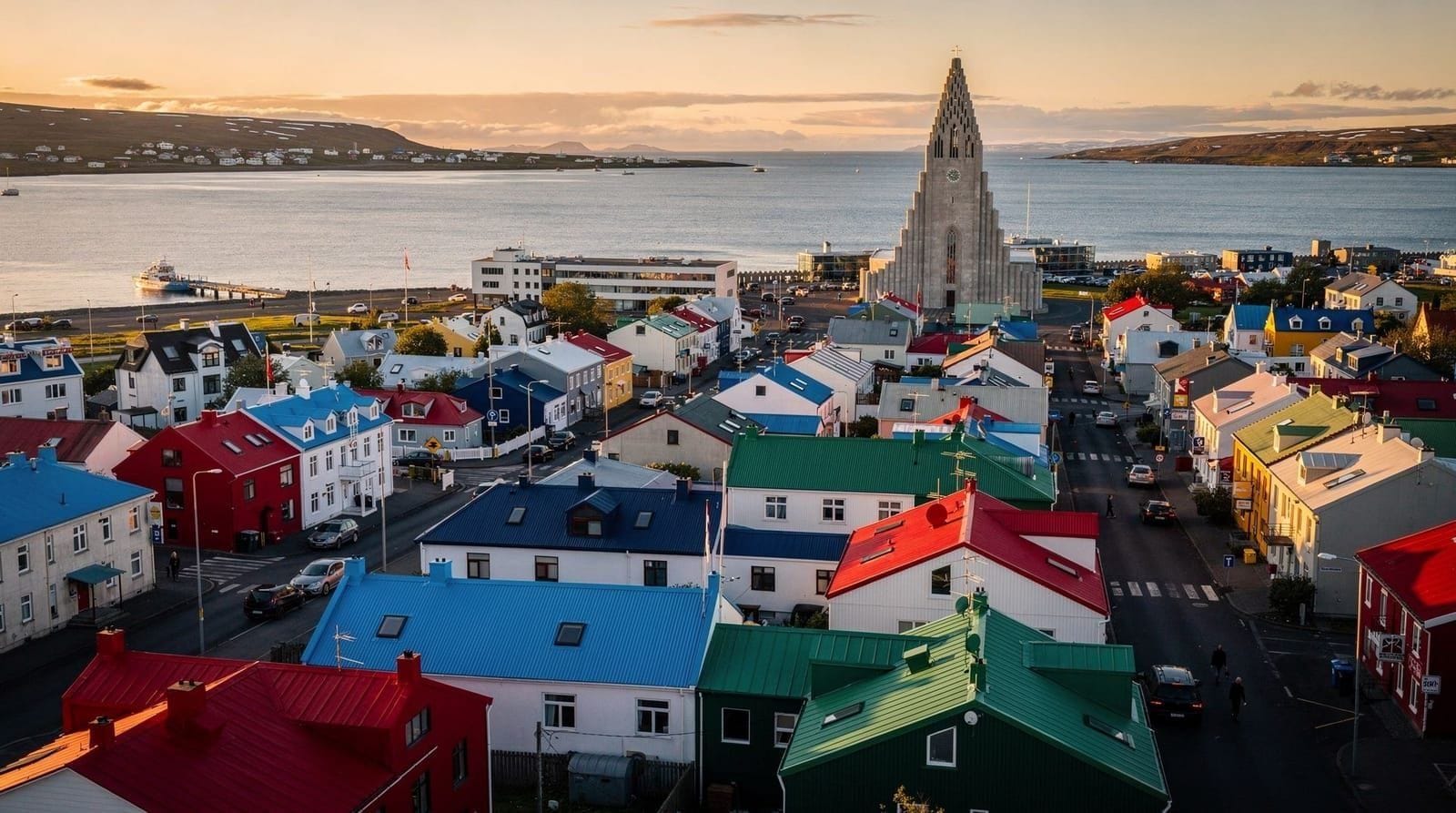
The Lutheran church on Skolavordustigur hill is the most recognisable building in Iceland. At 74.5 metres it is the tallest building in Iceland. The stepped concrete facade, inspired by basalt lava columns, is dramatic and photogenic from multiple angles.
The church interior is free to enter and worth a brief visit. It is deliberately austere — white walls, minimal decoration, large organ as the centrepiece. Attending a concert here (check the schedule at hallgrimskirkja.is) is worthwhile if timing allows.
The tower lift costs approximately ISK 1,000 and takes you to the observation level near the top. The view is the best panoramic view of Reykjavik available at this price. On a clear day you can see Esja mountain, the harbour, and the city spread across the peninsula. Allow 30 to 45 minutes total for church plus tower.
Harpa Concert Hall
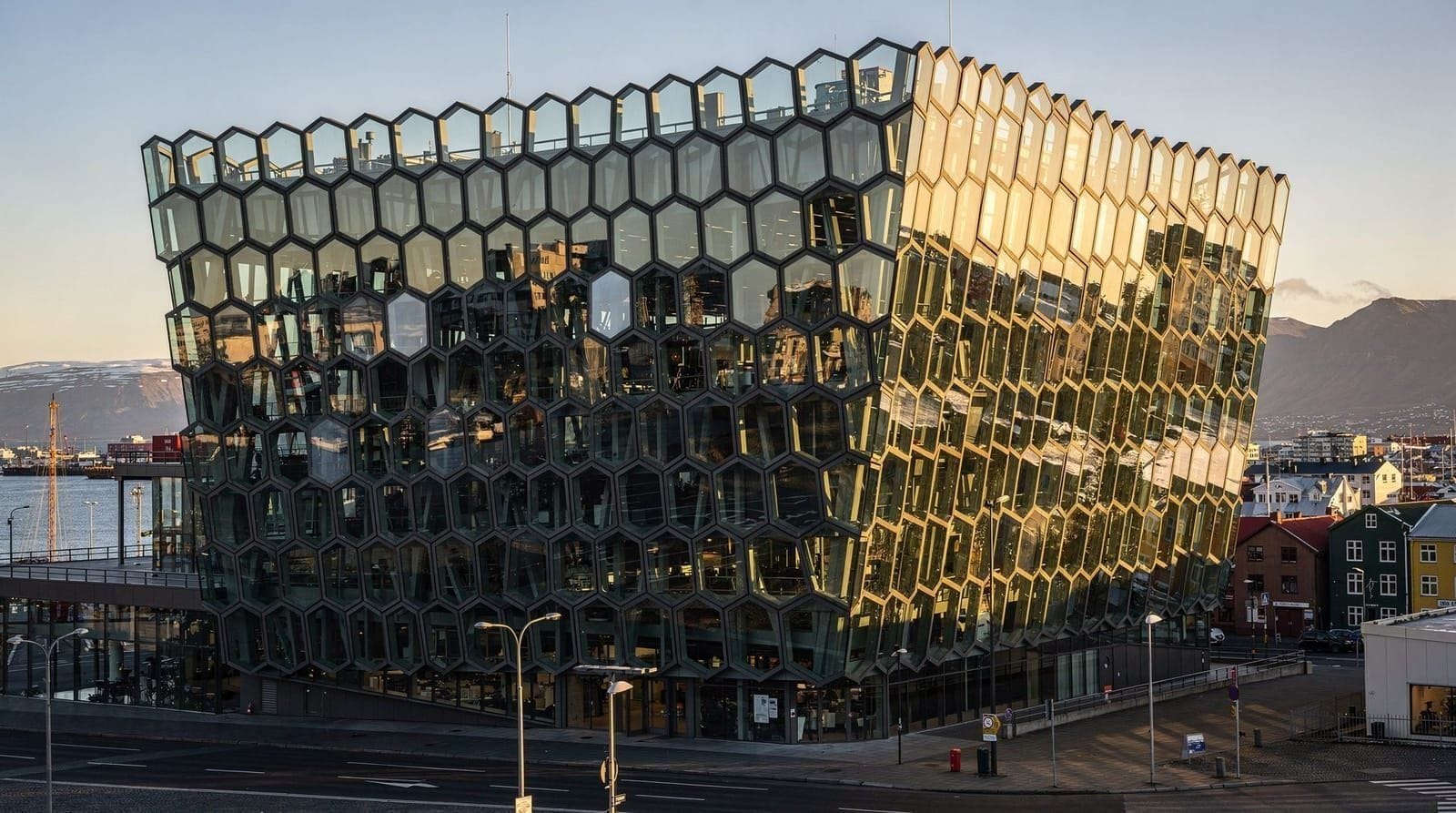
Harpa opened in 2011 on the harbour waterfront. The geometric glass-and-steel exterior was designed in collaboration with artist Olafur Eliasson and is genuinely architecturally interesting — the hexagonal glass panels modulate light differently through the day and across seasons.
Entry to the lobby and public interior spaces is free. The light and scale of the interior is worth experiencing. The building hosts the Iceland Symphony Orchestra, the Icelandic Opera, and major concerts. Checking the event calendar at en.harpa.is for performances during your visit is worthwhile.
The harbour walkway from Harpa east toward the Sun Voyager is one of the most pleasant short walks in the city.
The Sun Voyager (Solfar)
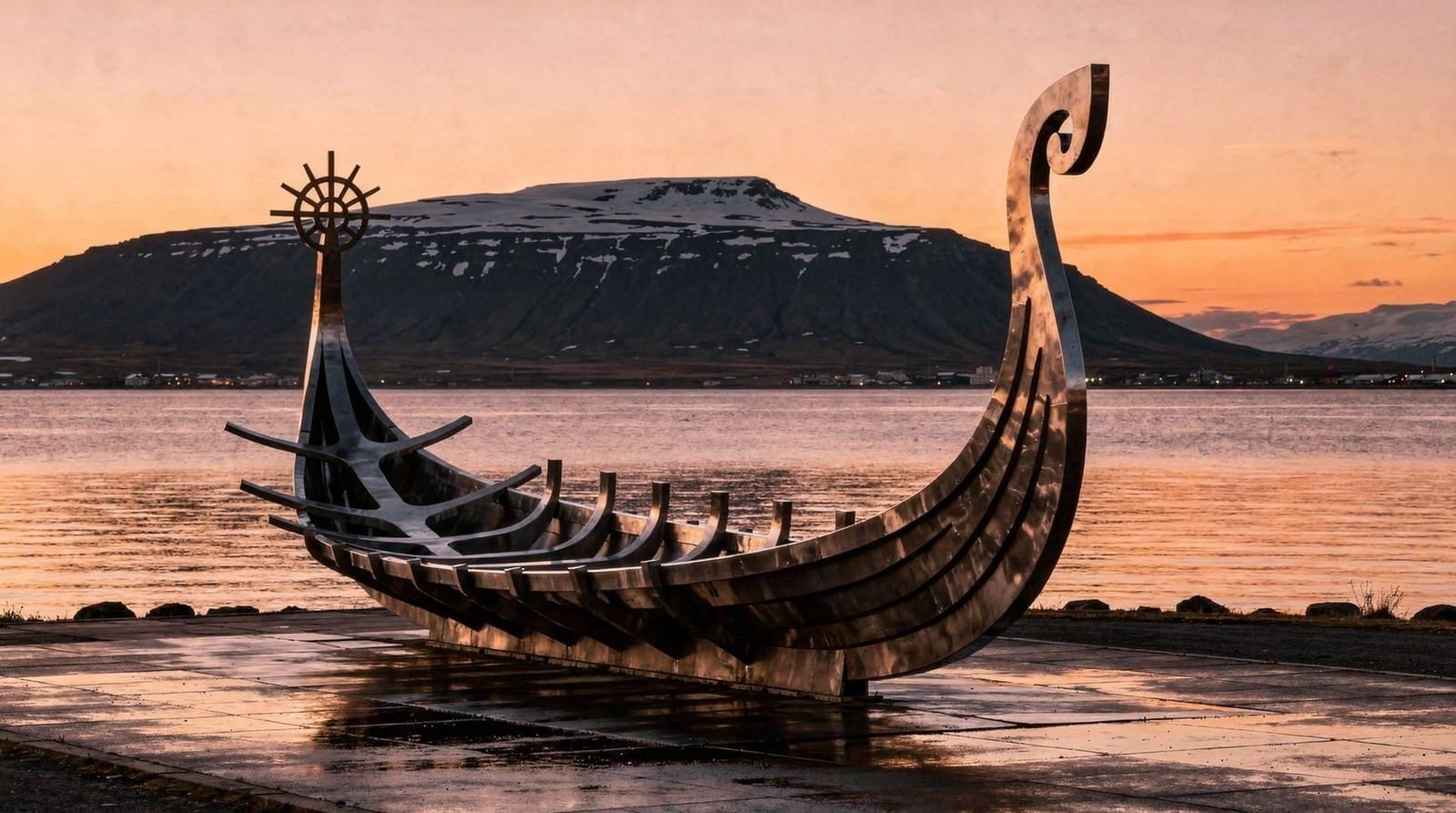
The polished steel boat sculpture on the waterfront, designed by Jon Gunnar Arnason and installed in 1990, is one of the most photographed sights in Iceland. It is free, open at all hours, and accessible directly from the waterfront promenade.
Despite the common description as a Viking ship, Arnason described it as a dream boat representing the promise of undiscovered territory. At sunset — or in the context of the midnight sun in summer — the light reflecting off the steel is genuinely striking.
Perlan: Wonders of Iceland
Book Perlan: Wonders of Iceland tickets in advance — it is the most comprehensive and polished museum experience in Reykjavik, and entry is around ISK 4,990-5,990.
Perlan sits on Oskjuhlid hill, a short drive, a 25-minute uphill walk, or a stop on the hop-on hop-off bus ticket that includes Perlan entry from the city centre. The dome building was originally a geothermal hot water storage facility. The museum inside covers Icelandic nature through a mix of walk-through exhibitions, a real ice cave (constructed indoors, genuinely cold — bring a layer), a simulated Northern Lights experience, and a volcano exhibition.
The views from the glass observation deck at the top are excellent. There is a cafe and a fine dining restaurant in the building.
The planetarium show (Arora — Northern Lights) costs extra, around ISK 1,500-1,800, and is worth it for families or anyone who will not see the actual Northern Lights during their visit. The 360-degree show runs approximately 25 minutes.
Perlan is the best single indoor option in bad weather. Allow two to three hours.
FlyOver Iceland
Book FlyOver Iceland entry tickets for a 20-minute simulated flying experience over Icelandic landscapes. Tickets cost around ISK 4,290-5,490.
The technology is a motion-platform ride combined with a large spherical screen. You sit in seats that tilt and move while a film takes you over glaciers, waterfalls, volcanoes, and coastlines. Wind, mist, and scent effects are added. It is impressive technically.
The experience is best for first-time visitors who want context for the landscape before heading out into it, and excellent for families with children. If you have already been to a FlyOver experience in Vancouver, Las Vegas, or elsewhere, the novelty is lower.
Located in the old harbour area at Aeroplan square (Lofhagavegur 2). Allow about 45 minutes total including the pre-show.
National Museum of Iceland
Book National Museum of Iceland tickets — the permanent collection costs around ISK 2,800-3,200 and covers Icelandic history from the settlement era (9th century) through to the modern period.
The Viking-age artefacts are the main draw. The Valkyrie figure, carved chessmen, and everyday objects from the settlement period are genuine and well-presented. The medieval religious art is notable — Iceland’s wooden church carvings are unusually sophisticated. The 20th-century section documents the rapid modernisation of Iceland between 1940 and 1980.
Allow two hours minimum. The museum is on Sudurvegur, about a 20-minute walk from the city centre or a short bus ride.
Whales of Iceland Museum
The Whales of Iceland exhibition at the old harbour (Fiskislod 23) features life-size models of all whale species found in Icelandic waters. Tickets are around ISK 3,500-4,500 for adults.
It is best described as educational rather than spectacular. The full-size blue whale model (the largest in the world, at 25 metres) is genuinely impressive at scale. The exhibition provides context for whale watching tours from Reykjavik. For families with children interested in marine life, it is a good option. Adults without children may find 45 minutes is enough.
Aurora Reykjavik: The Northern Lights Center
Located on the harbour (Grandagardur 2), this dedicated Northern Lights exhibition costs around ISK 2,800-3,500. It covers the science of aurora borealis through interactive displays and a reconstruction of the Northern Lights experience.
Honest assessment: if you are visiting Iceland during the Northern Lights season (roughly September to March) and plan to do an actual Northern Lights tour, you may find this exhibition redundant. It is most useful as a pre-trip primer or for visitors who cannot see the real thing due to timing or weather. The photography exhibition is well-curated.
Laugavegur and the Old Harbour
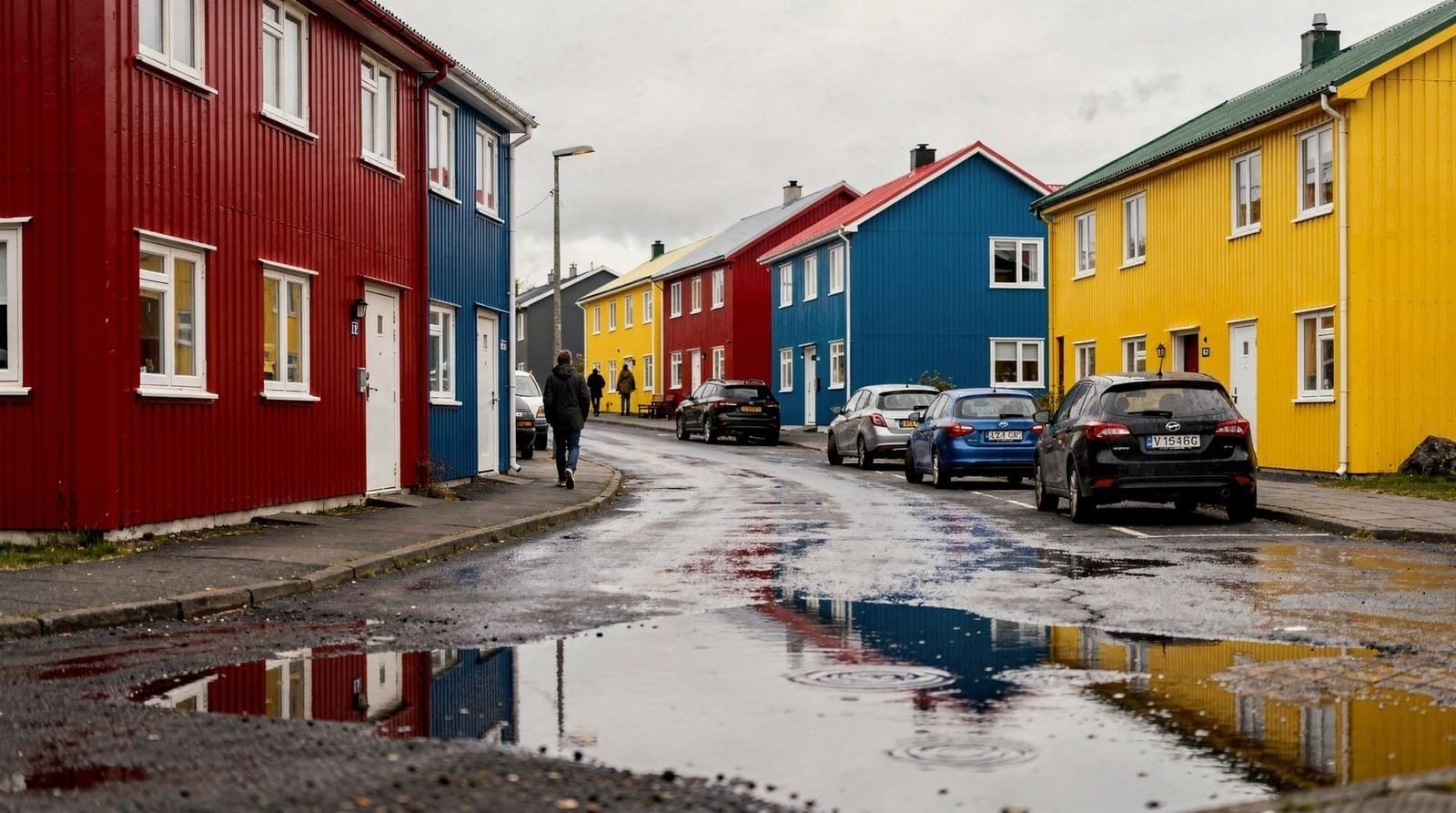
Laugavegur is Reykjavik’s main shopping street, running roughly from Hlemmur down toward the city pond, and it is worth a slow walk on its own merits — Icelandic design shops, wool sweater stores, record shops, and a dense run of cafes and bars sit alongside the more generic tourist-souvenir outlets. It connects naturally to Skolavordustigur, the colourful street leading up to Hallgrimskirkja, so the two are easy to combine in one pass. For where to actually eat and drink along the way, the Reykjavik food and drink guide is more useful than wandering in blind.
The Old Harbour (Grandi), a 15 to 20 minute walk northwest of the centre, is a working fishing harbour that has become the base for most boat tours and several of the museums above — Whales of Iceland, FlyOver Iceland, and the Saga Museum are all within a few minutes of each other here, alongside seafood restaurants and the Grandi Matholl food hall. It is also the departure point for whale watching tours, so pairing a harbour museum with an afternoon boat trip is an efficient use of a day when weather allows.
Comparing the paid attractions
If you only have time or budget for one or two paid attractions, here is how the main options compare:
| Attraction | Cost (ISK) | Time needed | Best for |
|---|---|---|---|
| Perlan (Wonders of Iceland) | ~4,990-5,990 | 2-3 hours | Best single indoor experience, real ice cave |
| FlyOver Iceland | ~4,290-5,490 | 45 min | Families, first-timers wanting landscape context |
| National Museum of Iceland | ~2,800-3,200 | 2 hours | History and Viking-age artefacts |
| Whales of Iceland | ~3,500-4,500 | 45-60 min | Families interested in marine life |
| Aurora Reykjavik | ~2,800-3,500 | 45 min | Pre-trip primer or if you miss the real Northern Lights |
| Lava Show | ~5,500-6,500 | 45-60 min | A genuinely unusual, memorable experience |
On a tight budget, skip straight to the free waterfront circuit and add only Perlan — it delivers the broadest value of any single paid attraction in the city.
Lava Show
The Lava Show (Laugavegur 33) is an indoor theatrical experience where real lava is melted at 1,100 degrees Celsius and poured in front of a live audience. Tickets for the Lava Show immersive experience are approximately ISK 5,500-6,500.
It is legitimately unusual — seeing actual flowing lava up close, with heat you can feel, is something very few venues in the world offer. The accompanying commentary covers Icelandic volcanism. If you are visiting during a period when the Reykjanes volcano is not accessible or active, the Lava Show provides an alternative way to experience lava directly.
Planning your museum day
A practical full-day museum itinerary:
Morning: walk from accommodation to Hallgrimskirkja (tower included), continue down Skolvorstigur to Laugavegur, coffee at Kaffitar or Reykjavik Roasters.
Late morning: Sun Voyager and Harpa waterfront walk (free, 45 minutes).
Lunch: Hlemmur Matholl or Grandi harbour area.
Afternoon: Perlan by taxi or rideshare (20 minutes from centre), allow two to three hours.
Evening: Laugavegur for happy hour, dinner.
This itinerary covers the core attractions, balances free and paid, and keeps travel distances manageable. For families, substitute Perlan afternoon with FlyOver Iceland, which is shorter and more immediately engaging for younger children.
For the full picture on what to see without spending money, see Reykjavik free things to do. For trip planning context, see Iceland first-timer guide and Reykjavik 3-day itinerary. If you have a bit more time, the Reykjavik 5-day itinerary slots museum time around day trips like the Golden Circle.
Frequently asked questions about Reykjavik museums and attractions
Is Hallgrimskirkja worth visiting?
The church interior is free and worth a few minutes. The tower lift costs ISK 1,000 and provides the best panoramic view of Reykjavik at this price point — genuinely worth it. Allow 30 to 45 minutes total.
What is Perlan and is it worth the price?
Perlan (Wonders of Iceland) is a large glass dome museum on Oskjuhlid hill covering glaciers, Northern Lights, volcanism, and Icelandic nature. Entry is around ISK 4,990-5,990. It includes a real indoor ice cave. It is the most polished museum experience in Reykjavik and worth the price, especially in poor weather.
Is FlyOver Iceland worth it?
FlyOver Iceland is a 20-minute simulated flying experience. Costs around ISK 4,290-5,490. Excellent for families and first-time Iceland visitors. If you have been to similar attractions elsewhere, the novelty is lower. Good bad-weather option.
What is the Sun Voyager and is it free?
Yes. The Sun Voyager (Solfar) is a steel sculpture on the waterfront — free, accessible at all hours, and one of the most photographed sights in Iceland.
How much does the National Museum of Iceland cost?
Entry is around ISK 2,800-3,200 for adults. It covers Icelandic history from the settlement era through the twentieth century. The Viking-age artefacts and medieval manuscripts are the highlights. Allow two to three hours.
What attractions are free in Reykjavik?
The Sun Voyager, Harpa lobby, Hallgrimskirkja interior (tower is paid), the city beaches, and Oskjuhlid hill are all free. See the complete Reykjavik free things to do guide for the full list.
What is the Harpa concert hall?
Harpa opened in 2011. The geometric glass facade by Olafur Eliasson is architecturally significant. The lobby is free. Concerts require tickets. Worth walking through on any day for the light and interior geometry.
How many museums should I visit in one day?
Two paid museums plus the free waterfront circuit is a realistic and comfortable maximum for one day. Trying to fit in three or more paid attractions tends to feel rushed and dilutes the experience, especially with Perlan’s uphill location adding travel time. Spread museum visits across your trip and use them as fallbacks on days with poor weather.
Is the Old Harbour worth visiting beyond the museums?
Yes. The Old Harbour (Grandi) is a working fishing harbour with a genuine, less touristy atmosphere than the city centre, plus the Grandi Matholl food hall and several good seafood restaurants. It is also the departure point for most whale watching tours, so it is easy to combine a harbour walk with a boat trip.
Top experiences
Bookable activities with verified prices and instant confirmation on GetYourGuide.