Whale Watching in Reykjavik: Tours, Species, and Honest Expectations
Reykjavik: The Original 3-Hour Whale Watching Tour
When is the best time for whale watching in Reykjavik?
April through October, with peak season June-August when humpback and minke whales are most reliably present in Faxafloi bay. Tours run year-round, but winter sightings are less predictable. Book morning tours in summer for calmer seas.
Why Reykjavik is good for whale watching
Faxafloi bay, the large shallow bay on which Reykjavik sits, is one of the more accessible whale watching locations in the North Atlantic. The bay’s shallow continental shelf creates productive feeding grounds, particularly in summer when fish stocks are high and marine mammal activity peaks.
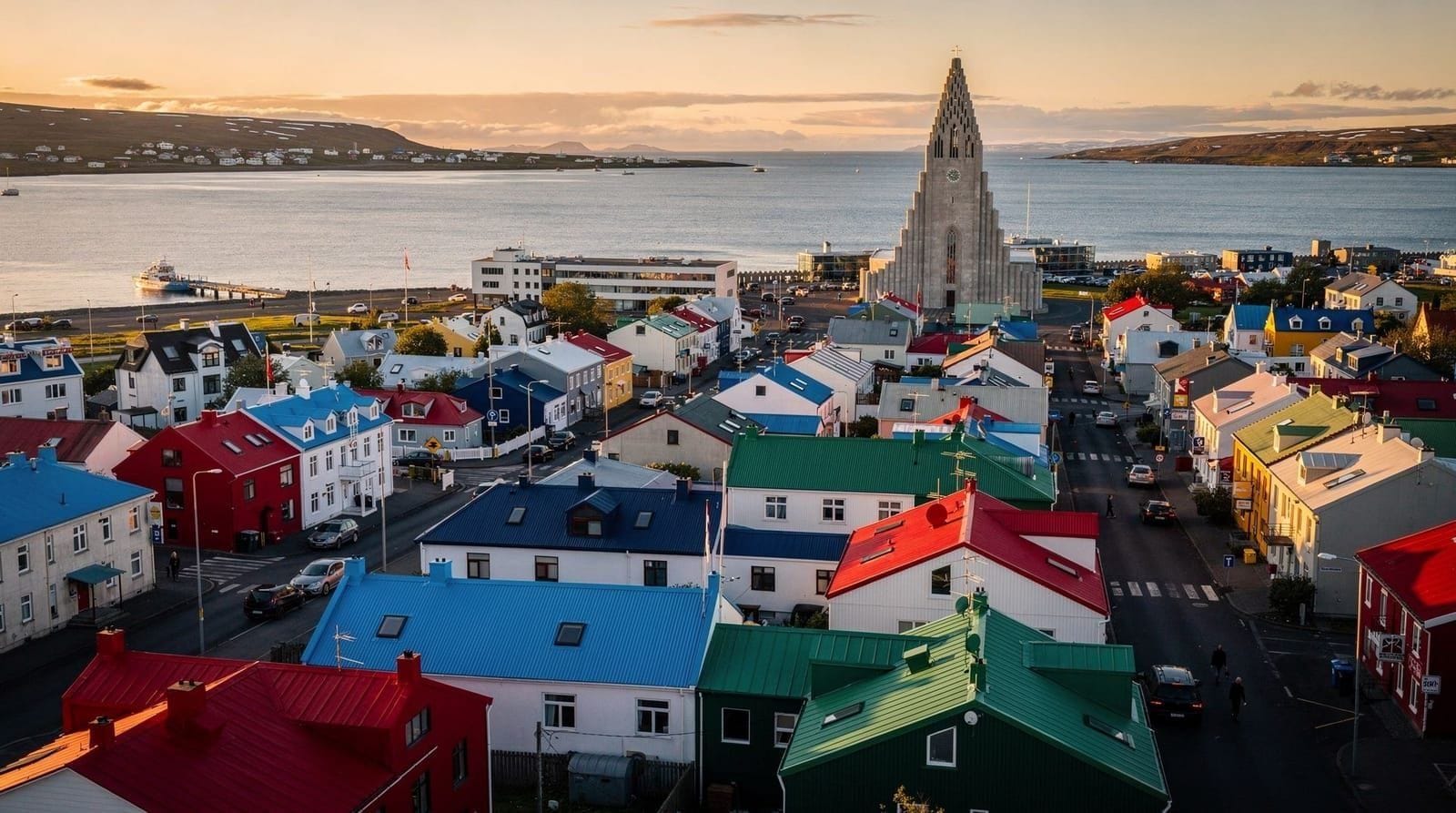
The Old Harbour (Gamli Hofnin) on Reykjavik’s western waterfront is the departure point for all major tours. Multiple operators run back-to-back departures throughout summer, making logistics simple. You can walk to the harbour from most central Reykjavik accommodation in 15-20 minutes.
Unlike some whale watching destinations that require long boat rides to reach offshore areas, Faxafloi’s whales are often found within 1-2 hours from the harbour, meaning a 3-hour tour gives you meaningful time on the water rather than just transit.
| Where | Old Harbour (Gamli Hofnin), Reykjavik, ~15-20 min walk from Laugavegur |
| Cost | Around ISK 12,000-16,000 for a standard 3-hour tour; speedboat and premium tours cost more |
| Time needed | 2-3 hours on the water, plus 15-20 min check-in |
| Getting there | Walkable from central Reykjavik, or a 5-10 minute taxi (ISK 1,500-2,000) |
| Best time | June-August for the highest sighting rates (85-95%); book mornings for calmer seas |
Species you may encounter
Minke whale: the most commonly seen species from Reykjavik tours. Minke whales are baleen whales, typically 7-10 metres long, and are reliably present in Faxafloi throughout the year. They surface and breathe regularly but are not showy — you see the back arching and the small dorsal fin, rarely the full body. Sightings are usually close and frequent.
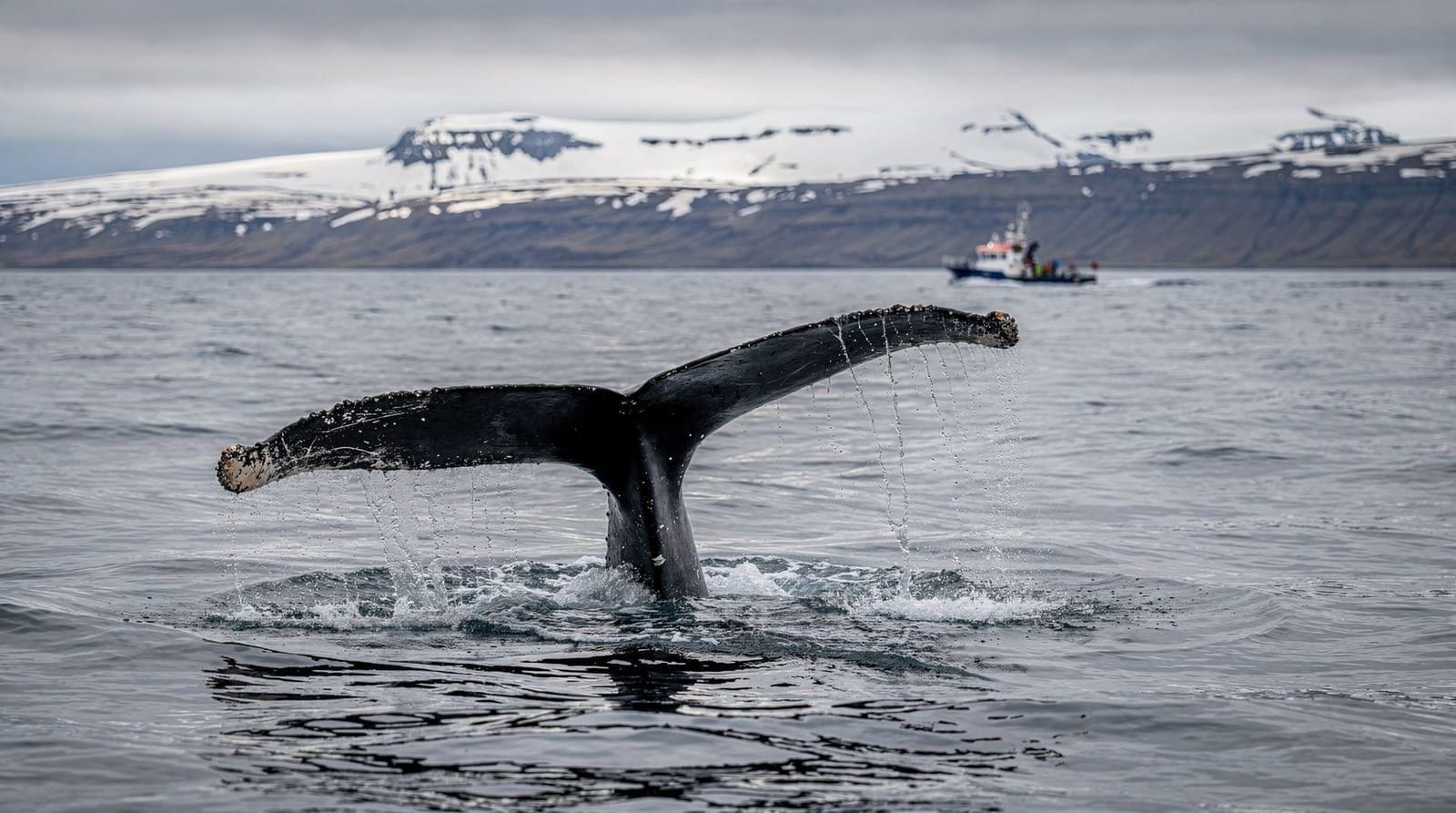
Humpback whale: the highlight species for most visitors. Humpbacks arrive in spring (April-May) and peak in June-August, drawn by capelin and sand lance schools in the bay. They are significantly larger than minkes (12-16 metres), more active at the surface, and occasionally breach (leap clear of the water). Not guaranteed on any given tour but reliably present in summer.
White-beaked dolphin: a robust North Atlantic dolphin species, often seen in active groups riding the bow wave of the tour vessels. Energetic and photogenic. Common May-September.
Harbour porpoise: Iceland’s most abundant small cetacean. Small (1.5 metres), dark, and fast — they surface briefly and are easy to miss unless you are specifically looking for them.
Occasional species: fin whales (the second-largest whale species), orcas (killer whales), blue whales, and sei whales occur in Icelandic waters but are not reliably encountered on standard Faxafloi tours. Reports of orcas from Reykjavik tours are infrequent but not unknown.
Puffins: not whales, but Atlantic puffins are reliably seen from most summer whale watching tours. Puffin colonies nest on islands in the bay and the birds fish actively in summer. A bonus for most visitors.
Seasons and sighting rates
April-May: the start of the active season. Humpbacks begin arriving but numbers are lower than summer. Minkes are present. Weather can be rough with April swells. Sighting rates approximately 65-75%.
June-August: peak season. Humpbacks reliably in the bay, often in groups. White-beaked dolphins active. Long summer days allow multiple departure times including evening/midnight sun tours. Sighting rates 85-95%. Busiest period — book in advance.
September-October: the shoulder period as humpbacks begin departing south. Minkes remain common. Weather becomes more variable. A good time to go if peak summer crowds are a concern. Sighting rates around 60-75%.
November-March: tours continue but sighting rates are lower (typically 40-60%) and weather can make departures rough. Winter whale watching is not the primary draw but is available and sometimes produces orca sightings (they follow herring schools in winter).
| Season | Sighting rate | What to expect |
|---|---|---|
| April-May | ~65-75% | Humpbacks arriving, minkes present, rougher April swells |
| June-August | ~85-95% | Peak season, humpbacks reliable, dolphins active, evening tours possible |
| September-October | ~60-75% | Humpbacks departing south, minkes remain common, fewer crowds |
| November-March | ~40-60% | Lowest rates, rougher seas, occasional orca sightings |
Comparing tour types
Standard 3-hour whale watching tour
The most popular format. Large vessels (40-100+ passengers) with heated indoor cabin, bar service, and viewing decks. Most include overalls/warm suits on loan. Good guides provide species identification and context.
The Original 3-Hour Whale Watching Tour is one of the most established operators in the Old Harbour with a strong sighting track record.
The whale watching tour with an expert marine biologist guide is worth the slight premium if you want genuine scientific context for what you are seeing.
Speedboat (RIB) tours
Rigid inflatable boats carrying 8-12 passengers, moving at speed to cover more ground. Better for dolphin chasing and more adventurous in feel. Significantly rougher in choppy conditions. Wetsuit overalls are typically provided. For visitors who want puffins without giving up the speed of a RIB, this 2-hour whale and puffin watching RIB boat tour combines both in the same fast format.
The 2-hour speedboat whale watching tour suits visitors who want a shorter, faster, more active experience and have reasonable sea legs.
Evening and puffin combination tours
Summer evening tours take advantage of Iceland’s long daylight hours and often combine whale watching with puffin viewing near their nesting colonies.
The premium evening whale and puffin watching tour is a popular summer choice, taking advantage of the golden evening light and active marine life.
Yacht tours
A small number of operators run whale watching on smaller sailing yachts, offering a quieter, lower-impact experience with fewer passengers. More expensive but genuinely different.
| Tour type | Duration | Typical cost (ISK) | Best for |
|---|---|---|---|
| Standard vessel | 3 hours | ~12,000-16,000 | Most visitors; stable, heated cabin, good for families |
| Speedboat (RIB) | 2 hours | ~13,000-17,000 | Shorter time commitment, more active feel, good sea legs needed |
| Evening/puffin combo | 3 hours | ~15,000-19,000 | Golden light photography, combining puffins with whales |
| Expert guide | 3 hours | Slight premium over standard | Visitors who want deeper scientific context |
| Small yacht | Varies | Highest cost | Quieter, lower-impact, smaller groups |
For most first-time visitors, the standard 3-hour tour offers the best balance of stability, cost, and sighting opportunity. Save the speedboat for a return visit or if the shorter duration genuinely suits your schedule better.
Managing seasickness: practical advice
Faxafloi is a real bay with real swells. Even people who do not normally get motion sick can find a 3-hour whale watching trip uncomfortable if conditions are rough. Practical steps:
Medication: over-the-counter dimenhydrinate (Dramamine, Gravol) or meclizine (Bonine) taken 1-2 hours before departure are the most effective preventives. Prescription scopolamine patches work well for longer exposures. Do not rely on ginger supplements alone for significant swell.
Position on the vessel: stand on the outer deck rather than sitting in the enclosed cabin. Keep your eyes on the horizon — a fixed external point. The centre of the vessel and mid-height between bow and stern is the most stable position.
Food: a light meal beforehand. Empty stomachs and heavy greasy meals both worsen susceptibility. Crackers or plain bread help.
Summer vs spring/autumn: June-August tends to have calmer conditions than April-May and September-October. If you are very susceptible, a summer visit is lower risk.
Most operators offer a “sightings guarantee” — if no whales are spotted, you receive a free ticket for another tour. This is standard practice and worth confirming when booking.
Children and first-time boat travellers are sometimes more affected than expected, even on calm days, simply from the unfamiliar motion. If travelling with kids prone to motion sickness, consider a preventive dose of an age-appropriate medication before boarding rather than waiting to see how they feel once underway.
Getting to the Old Harbour
The Old Harbour is on Reykjavik’s western waterfront, at the foot of Geirsgata street. It is approximately 1.5 km from the main shopping street (Laugavegur). The walk takes 15-20 minutes along the harbour promenade — a pleasant route past the Harpa Concert Hall.
By taxi from central Reykjavik: 5-10 minutes, ISK 1,500-2,000. Bus routes also serve the harbour area.
Operators have their offices and check-in desks directly on the harbour quayside. Arrive 15-20 minutes before departure time to collect your overall/suit and boarding pass.
Combining with a Reykjavik day
Whale watching fits naturally into a Reykjavik day. A morning tour (typically 09:00 departure) uses the most reliably calm sea hours and leaves the afternoon free. An evening tour in summer takes advantage of the low-angle golden light that makes for excellent photography.
The Old Harbour area itself has good food options: Saegreifinn (Sea Baron) is a Reykjavik institution serving grilled langoustine soup directly on the harbour quayside. The broader Reykjavik food and drink guide covers the full picture.
For planning a visit that includes whale watching alongside the city’s main sights, the Reykjavik 3-day itinerary builds a realistic schedule. The Iceland with kids guide has specific notes on whale watching with children — it is one of the most reliably popular family activities in Reykjavik.
The Reykjavik weekend 2-day itinerary also covers fitting a whale watching tour into a short city break. For a longer stay, the Reykjavik 5-day itinerary incorporates whale watching as part of a broader programme.
Photography on whale watching tours
Whale photography is rewarding but challenging. Key practical points:
Equipment: a zoom lens (equivalent to 200-400mm) makes a significant difference. Phone cameras with telephoto zoom modes are increasingly capable. A stabilised lens or body helps on a moving vessel.
Settings: for wildlife in bright conditions, use shutter priority at 1/1000s or faster to freeze motion. At dusk or overcast conditions, open the aperture (f/4-5.6) and push ISO higher.
Anticipate the surfacing: watch for where a whale last surfaced and watch that area. Minkes and humpbacks tend to follow predictable arcing paths between dives. After a deep dive, humpbacks typically surface 8-12 minutes later.
Humpback breach: if a humpback begins tail-slapping or pec-slapping (raising a flipper and hitting the water), hold your camera ready — a full breach (leap from the water) is possible. Hold the camera up and shoot a burst sequence; breaches last under 2 seconds.
Photography tours: if getting good images is a priority, the photography-focused evening tours with smaller groups and guide assistance are worth the premium.
Understanding whale behaviour on tours
Most visitors see minke and humpback whale surfacing behaviour: the whale arches its back, shows the dorsal fin, and submerges. This is the standard sighting.
More dramatic behaviours to look for:
Fluking: a humpback raising its tail fluke clear of the water before a deep dive. The distinctive pattern of markings on the underside is unique to each individual whale and is used by researchers to identify them. Fluking typically indicates a dive of 10 minutes or more.
Breaching: a full or partial leap from the water. More common in some areas and seasons than others. Not guaranteed but exhilarating when it happens.
Lunge feeding: humpbacks sometimes lunge sideways at the surface with the mouth open, scooping fish. Less commonly seen in Faxafloi than in some other Icelandic whale watching locations.
Blow: the spray of moisture from a whale’s exhale. Humpbacks produce a distinctive tall, narrow blow (up to 3-4 metres high) visible at distance. Minke whale blows are smaller and less visible. Learning to spot a blow is the fastest way to find whales before the rest of the boat does.
The Old Harbour neighbourhood
The Old Harbour is worth exploring before or after your tour. Beyond the whale watching operators, the area has:
Saegreifinn (Sea Baron): a Reykjavik institution, serving Iceland’s most talked-about langoustine soup and grilled fish at very reasonable prices from a small harbour-side hut. The queue is worth it.
Reykjavik Maritime Museum (Sjominjasafnid): a museum on the harbour covering Iceland’s fishing history, housed in a former fish-freezing facility. Moderate admission fee and genuinely interesting if you want context on how fishing shaped Icelandic society.
Whales of Iceland exhibition: a large educational exhibition with life-size whale models, inside the harbour area. Some whale watching operators offer a combo ticket.
Mjodd and the harbourside promenade: a pleasant walk west of the Old Harbour leads toward the Seltjarnarnes peninsula, which juts into Faxafloi bay and offers good views back toward Reykjavik and the mountains. This is also a good spot for northern lights viewing if you are in the area on a clear winter evening.
The Reykjavik museums and attractions guide covers the Maritime Museum and other harbour-area cultural sites in more detail. The Reykjavik free things to do guide includes the harbour promenade walk as one of the city’s best zero-cost activities. For broader Iceland trip planning, the Iceland cost and budget guide puts whale watching tour costs in context.
Frequently asked questions about whale watching in Reykjavik
What whales can you see from Reykjavik?
Minke whales are the most commonly seen species year-round. Humpback whales arrive in spring and are reliably present June-August. White-beaked dolphins are frequently spotted. Blue whales, fin whales, and orcas are occasional sightings but not reliably seen on standard tours from Reykjavik.
How likely are you to see whales on a Reykjavik tour?
Most reputable operators report sighting rates of 80-95% during summer peak season. In shoulder season, sighting rates drop to 60-75%. Winter tours have the lowest rates, typically 40-60%.
Is seasickness a problem on whale watching tours?
Potentially yes. If you are prone to motion sickness, take medication 1-2 hours before departure, eat a light meal beforehand, stand on deck, and keep your eyes on the horizon. Summer is generally calmer than spring and autumn.
How long do whale watching tours last?
Most standard tours are 3 hours. Express/speedboat tours run 2 hours. Departure times range from early morning to evening midnight sun tours in summer.
Where do whale watching tours depart from in Reykjavik?
All major whale watching tours depart from the Old Harbour (Gamli Hofnin) in Reykjavik, approximately 1.5 km from the city centre. Allow 15 minutes walk from the main tourist area.
What is the difference between a traditional boat and a speedboat tour?
Traditional whale watching vessels are larger (30-100+ passengers), slower, and more stable. Speedboat (RIB) tours carry fewer passengers (8-12), move faster, and cover more ground but can be rougher in choppy water.
Do whale watching operators offer a sightings guarantee?
Most reputable operators offer a free rebooking or a voucher for another tour if no whales are spotted. This is standard practice in Reykjavik and worth confirming with your specific operator before booking, especially for winter tours where sighting rates are lower.
Is whale watching worth doing in winter?
It can be, but expectations should be adjusted. Sighting rates drop to roughly 40-60% and conditions are rougher, but winter tours occasionally produce orca sightings as they follow herring schools. If seeing a whale is the priority, June-August is far more reliable.
Top experiences
Bookable activities with verified prices and instant confirmation on GetYourGuide.